HARRISBURG, PA - The Pennsylvania Board of Game Commissioners today gave final approval to hunting and trapping seasons and bag limits for the 2017-18 licen

se year.
A list of all seasons and bag limits appears at the end of this news release.
The commissioners also set the number of antlerless deer licenses to be allocated, as well as the number of elk licenses to be allocated for the coming license year.
The board voted to allocate 804,000 antlerless deer licenses statewide, which up from 748,000 licenses in 2016. Allocations by Wildlife Management Unit (WMU) are as follows, with the allocation from the previous license year appearing in parentheses: WMU 1A – 52,000 (46,000); WMU 1B – 35,000 (29,000); WMU 2A – 50,000 (43,000); WMU 2B – 60,000 (61,000); WMU 2C – 31,000 (31,000); WMU 2D – 55,000 (55,000); WMU 2E – 22,000 (21,000); WMU 2F – 24,000 (22,000); WMU 2G – 25,500 (21,000); WMU 2H – 7,000 (6,000); WMU 3A – 20,000 (15,000); WMU 3B – 30,000 (28,000); WMU 3C – 42,000 (36,000); WMU 3D – 25,000 (25,000); WMU 4A – 30,000 (30,000); WMU 4B – 26,000 (26,000); WMU 4C – 29,000 (25,000); WMU 4D – 34,000 (34,000); WMU 4E – 27,500 (25,000); WMU 5A – 22,000 (19,000); WMU 5B – 57,000 (50,000); WMU 5C – 70,000 (70,000); and WMU 5D – 30,000 (30,000).
Hunters should note the boundary between WMUs 2C and 2E has changed.
Hunting licenses for 2017-18 go on sale in mid-June and become effective July 1. After hunters purchase a general hunting license, they may apply for antlerless deer licenses based on staggered timelines, which will be outlined in the 2017-18 Pennsylvania Hunting & Trapping Digest to be made available online.
The board also voted to issue 118 elk licenses (25 antlered, 93 antlerless) for the 2017 hunt.
The licenses again will be awarded by lottery, and the deadline to enter the drawing is July 31.
Elk applications cost $10.90, and only one application may be submitted each license year.
Other modifications approved for the 2017-18 seasons include: moving the statewide archery bear season to the next-to-the-last week of the archery deer season; changing the firearms deer season in Wildlife Management Units 5A and 5B to bucks-only hunting from the opening day through the first Friday; opening a conservative mid-week fall turkey season in Wildlife Management Area 5B, and reducing the season length in WMUs 4A, 4B and 4E; eliminating the post-Christmas segment of the ruffed-grouse season to improve adult survival due to recent population declines; restoring an extended black-bear season in WMU 3A; opening the Central Susquehanna Wild Pheasant Recovery Area to a youth-only pheasant-hunting season; removing restrictions on hunting small game, other than pheasants, in all Wild Pheasant Recovery Areas, and re-establishing statewide put-and-take bobwhite quail hunting with a longer season and larger bag limit, given the lack of wild quail in the state and the low likelihood of quail reintroduction occurring in Pennsylvania anytime soon.
Several highlights pertaining to the 2017-18 seasons and bag limits follow.
SPLIT FIREARMS DEER SEASONS ADOPTED
The Board of Game Commissioners adopted a slate of deer seasons for 2017-18, proposing a split, five-day antlered deer season (Nov. 27-Dec. 1) and seven-day concurrent season (Dec. 2-9) in 20 Wildlife Management Units. They are WMUs 1A, 1B, 2A, 2C, 2D, 2E, 2F, 2G, 2H, 3A, 3B, 3C, 3D, 4A, 4B, 4C, 4D, 4E, 5A and 5B. The package also retains the two-week (Nov. 27-Dec. 9) concurrent, antlered and antlerless deer season in WMUs 2B, 5C and 5D.
Hunters with Deer Management Assistance Program (DMAP) antlerless deer permits may use the permits during any established deer season, so long as the permits are used on the lands for which they are issued. DMAP permit holders will continue to be able to harvest antlerless deer from Nov. 27-Dec. 9 in WMUs 1A, 1B, 2A, 2C, 2D, 2E, 2F, 2G, 2H, 3A, 3B, 3C, 3D, 4A, 4B, 4C, 4D, 4E, 5A and 5B. Fees for DMAP permits are $10.90 for residents and $35.90 for nonresidents.
DMAP permits also may be transferred to Mentored Hunting Program participants.
The board retained antler restrictions for adult and senior license holders. It remains the “three-up” on one side, not counting a brow tine, provision for the western Wildlife Management Units of 1A, 1B, 2A, 2B and 2D, and the three points on one side in all other WMUs. Those exempt from these antler restrictions are mentored youth hunters, junior license holders, disabled hunters with a permit to use a vehicle as a blind and resident active-duty military on leave.
Once again this year, the commissioners gave tentative approval to concurrent hunting of antlered and antlerless deer in WMUs 2B, 5C and 5D during most seasons, with the first segment of the archery season to run from Sept. 16 to Nov. 25 in those WMUs.
FALL TURKEY SEASON CHANGES OK’D
The Pennsylvania Board of Game Commissioners today gave final approval to fall turkey seasons for 2017 and spring gobbler dates for 2018.
The board adopted a conservative, midweek fall turkey season in Wildlife Management Unit 5B, which long has been closed to fall-turkey hunting.
The board also gave final approval to reducing the length of the fall season in three Wildlife Management Units – WMUs 4A, 4B, and 4E. Those WMUs all have shown indications of declining turkey population trends.
All recommendations on fall turkey season length are made in accordance with guidelines in the Game Commission’s Wild Turkey Management Plan.
The fall turkey seasons for 2017-18 are as follows. In WMUs 1A, 2A, 4A and 4B, there is a one-week season (Oct. 28-Nov. 4), plus a three-day Thanksgiving season (Nov. 23-25).
In WMU 1B, the season remains one week (Oct. 28-Nov.4), with no Thanksgiving season.
In WMU 2B (shotgun and bow only), the season runs from Oct. 28-Nov. 17 and Nov. 23-25.
In WMU 2C, the season is from Oct. 28-Nov. 17 and Nov. 23-25.
In WMUs 2D, 2E, 2F, 2G, 2H, 3A, 3B, 3C, 3D, 4C, 4D and 4E, the season runs from Oct. 28-Nov. 11 and Nov. 23-25.
In WMU 5A, the season runs from Nov. 2-4.
In WMU 5B, the season is being held from Oct. 31-Nov. 2.
And in WMUs 5C and 5D, the fall season remains closed.
For the 2018 spring gobbler season, which runs from April 28-May 31, 2018, the board continued with legal hunting hours to reflect the following: from April 28-May 12, 2018 legal shooting hours will be one-half hour before sunrise until noon; and from May 14-31, hunters may hunt all day, from one-half hour before sunrise until one-half hour after sunset.
The one-day Spring Gobbler Youth Hunt will be held on April 21, 2018, and run from one-half hour before sunrise until noon. All junior license holders and Mentored Youth Hunting Program permit holders can participate in this special half-day hunt, as well as the other spring season dates.
2017-18 HUNTING SEASONS AND BAG LIMITS
SQUIRRELS, Red, Gray, Black and Fox (Combined): Special season for eligible junior hunters, with or without required license, and mentored youth – Sept. 30-Oct. 14 (6 daily, 18 in possession limit after first day).
SQUIRRELS, Red, Gray, Black and Fox (Combined): Oct. 14-Nov. 25; Dec. 11-23 and Dec. 26-Feb. 28 (6 daily, 18 possession).
RUFFED GROUSE: Oct. 14–Nov. 25 and Dec. 11-23 (2 daily, 6 possession).
RABBIT (Cottontail) Special season for eligible junior hunters, with or without required license: Sept. 30-Oct. 14 (4 daily, 12 possession).
RABBIT (Cottontail): Oct. 14-Nov. 25, Dec. 11-23 and Dec. 26-Feb. 28 (4 daily, 12 possession).
PHEASANT: Special season for eligible junior hunters, with or without required license – Oct. 7-14 (2 daily, 6 in possession). Male pheasants only in WMUs 2A, 2C, 4C, 4E, 5A and 5B. Male and female pheasants may be taken in all other WMUs. There is no open season for taking pheasants in Wild Pheasant Recovery Areas, except within the Central Susquehanna Wild Pheasant Recovery Area, as authorized by executive order.
PHEASANT: Male only in WMUs 2A, 2C, 4C, 4E, 5A and 5B. Male and female may be taken in all other WMUs – Oct. 21-Nov. 25, Dec. 11-23 and Dec. 26-Feb. 28 (2 daily, 6 in possession). There is no open season for taking pheasants in Wild Pheasant Recovery Areas, except within the Central Susquehanna Wild Pheasant Recovery Area, as authorized by executive order.
BOBWHITE QUAIL: Oct. 14-Feb. 28 (8 daily, 24 possession).
HARES (SNOWSHOE RABBITS) OR VARYING HARES: Dec. 26–Jan. 1, in all WMUs (1 daily, 3 possession).
WOODCHUCKS (GROUNDHOGS): No closed season, except on Sundays and during the regular firearms deer seasons. No limit.
CROWS: July 1-April 8, on Friday, Saturday and Sunday only. No limit.
STARLINGS AND ENGLISH SPARROWS: No closed season, except during the antlered and antlerless deer season. No limit.
WILD TURKEY (Male or Female): WMU 1B – Oct. 28-Nov. 4; WMU 2B (Shotgun and bow and arrow) – Oct. 28-Nov. 17 and Nov. 23-25; WMUs 1A, 2A, 4A and 4B, – Oct. 28-Nov. 4 and Nov. 23-25; WMUs 2D, 2E, 2F, 2G, 2H, 3A, 3B, 3C, 3D, 4C, 4D and 4E– Oct. 28-Nov. 11 and Nov. 23-25; WMU 2C – Oct. 28-Nov. 17 and Nov. 23-25; WMU 5A – Nov. 2-4; WMU 5B – Oct. 31-Nov. 2; WMUs 5C and 5D – CLOSED TO FALL TURKEY HUNTING.
SPRING GOBBLER (Bearded bird only): Special season for eligible junior hunters, with required license, and mentored youth – April 21, 2018. Only 1 spring gobbler may be taken during this hunt.
SPRING GOBBLER (Bearded bird only): April 28-May 31, 2018. Daily limit 1, season limit 2. (Second spring gobbler may be only taken by persons who possess a valid special wild turkey license.) From April 28-May 12, legal hunting hours are one-half hour before sunrise until noon; from May 14-31, legal hunting hours are one-half hour before sunrise until one-half hour after sunset.
BLACK BEAR (Statewide) Archery: Oct. 30-Nov. 4. Only 1 bear may be taken during the license year.
BLACK BEAR (Statewide): Nov. 18-22. Only 1 bear may be taken during the license year.
BLACK BEAR (WMUs 3B, 3C and 3D): Nov. 27-Dec. 2. Only 1 bear may be taken during the license year.
BLACK BEAR (WMUs 2B, 5B, 5C and 5D): Nov. 27-Dec. 9. Only 1 bear may be taken during the license year.
BLACK BEAR (WMUs 1B, 2C, 3A, 4B, 4C, 4D and 4E): Nov. 29-Dec. 2. Only 1 bear may be taken during the license year.
BLACK BEAR (WMUs 2B, 5C and 5D) archery: Sept. 16-Nov. 25. Only 1 bear may be taken during the license year.
BLACK BEAR (WMU 5B) archery: Sept. 30-Nov. 11. Only 1 bear may be taken during the license year.
BLACK BEAR (WMUs 2B, 5B, 5C and 5D) muzzleloader: Oct. 14-21. Only 1 bear may be taken during the license year.
BLACK BEAR (WMUs 2B, 5B, 5C and 5D) special firearms: Oct. 19-21, for junior and senior license holders, disabled hunters with a permit to use a vehicle as a blind and resident active duty military.
ELK (Antlered or Antlerless): Oct. 30-Nov.4. Only one elk may be taken during the license year.
ELK, EXTENDED (Antlered and Antlerless): Nov. 6-11. Only one elk may be taken during the license year. Eligible elk license recipients who haven’t harvested an elk by Nov. 5, in designated areas.
DEER, ARCHERY (Antlered and Antlerless) WMUs 2B, 5C and 5D: Sept. 16- Nov. 25 and Dec. 26-Jan. 27, 2018. One antlerless deer with each required antlerless license. One antlered deer per hunting license year.
DEER, ARCHERY (Antlered and Antlerless) Statewide: Sept. 30-Nov. 11 and Dec. 26-Jan. 13. One antlered deer per hunting license year. One antlerless deer with each required antlerless license.
DEER (Antlered and Antlerless) WMUs 2B, 5C and 5D: Nov. 27-Dec. 9. One antlered deer per hunting license year. An antlerless deer with each required antlerless license.
DEER (Antlered Only) WMUs 1A, 1B, 2A, 2C, 2D, 2E, 2F, 2G, 2H, 3A, 3B, 3C, 3D, 4A, 4B, 4C, 4D, 4E, 5A and 5B: Nov. 27-Dec. 1. One antlered deer per hunting license year. (Holders of valid DMAP antlerless deer permits may harvest antlerless deer on DMAP properties during this period.)
DEER (Antlered and Antlerless) WMUs 1A, 1B, 2A, 2C, 2D, 2E, 2F, 2G, 2H, 3A, 3B, 3C, 3D, 4A, 4B, 4C, 4D, 4E, 5A and 5B: Dec. 2-9. One antlered deer per hunting license year. An antlerless deer with each required antlerless license.
DEER, ANTLERLESS (Statewide): Oct. 19-21. Junior and Senior License Holders, Mentored Youth Permit Holders, Disabled Person Permit (to use a vehicle) Holders, and Pennsylvania residents serving on active duty in U.S. Armed Services or in the U.S. Coast Guard only, with required antlerless license. Also included are persons who have reached or will reach their 65th birthday in the year of the application for a license and hold a valid adult license, or qualify for license and fee exemptions under section 2706. One antlerless deer with each required antlerless license.
DEER, ANTLERLESS MUZZLELOADER (Statewide): Oct. 14-21. An antlerless deer with each required antlerless license.
DEER, ANTLERED OR ANTLERLESS FLINTLOCK (Statewide): Dec. 26-Jan. 13. One antlered deer per hunting license year, or one antlerless deer and an additional antlerless deer with each required antlerless license.
DEER, ANTLERED OR ANTLERLESS FLINTLOCK (WMUs 2B, 5C, 5D): Dec. 26-Jan. 27. One antlered deer per hunting license year, or one antlerless deer and an additional antlerless deer with each required antlerless license.
DEER, ANTLERLESS EXTENDED REGULAR FIREARMS: (Allegheny, Bucks, Chester, Delaware, Montgomery and Philadelphia counties): Dec. 26-Jan. 27. An antlerless deer with each required antlerless license.
DEER, ANTLERLESS (Military Bases): Hunting permitted on days established by the U.S. Department of the Army at Letterkenny Army Depot, Franklin County; New Cumberland Army Depot, York County; and Fort Detrick, Raven Rock Site, Adams County. An antlerless deer with each required antlerless license.
2017-18 FURBEARER HUNTING SEASONS
COYOTES: No closed season. Unlimited. Outside of any big game season (deer, bear, elk and turkey), coyotes may be taken with a hunting license or a furtaker license, and without wearing orange. During any big game season, coyotes may be taken while lawfully hunting big game or with a furtaker license.
RACCOONS and FOXES: Oct. 21–Feb. 17, unlimited.
OPOSSUM, STRIPED SKUNKS and WEASELS: No closed season, except Sundays. No limits.
BOBCAT (WMUs 2A, 2C, 2E, 2F, 2G, 2H, 3A, 3B, 3C, 3D, 4A, 4C, 4D and 4E): Jan. 13-Feb. 7. One bobcat per license year. Licensed furtakers may obtain one permit each.
PORCUPINES: Sept. 1-March 31, 2018. (3 daily, season limit of 10)

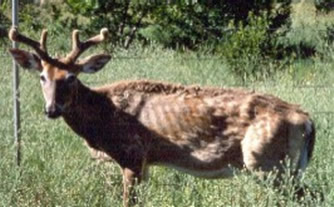 HARRISBURG, PA - The Pennsylvania Game Commission tested 5,707 deer and 110 elk for Chronic Wasting Disease (CWD) during 2016.