Showing posts with label Archery. Show all posts

Thursday, June 17, 2021

2021 3D Archery Schedule At Bull Creek

 Here is the schedule for the 2021 season. 


  • TRADITIONAL  BOWS
  • COMPOUND BOWS
  • CROSSBOW

30+ Targets

Food and Beverages Available
             
Registration 8:00 AM-1:00 PM


Adults $10.00    Youth Under 16 $5.00


Kitchen will be open

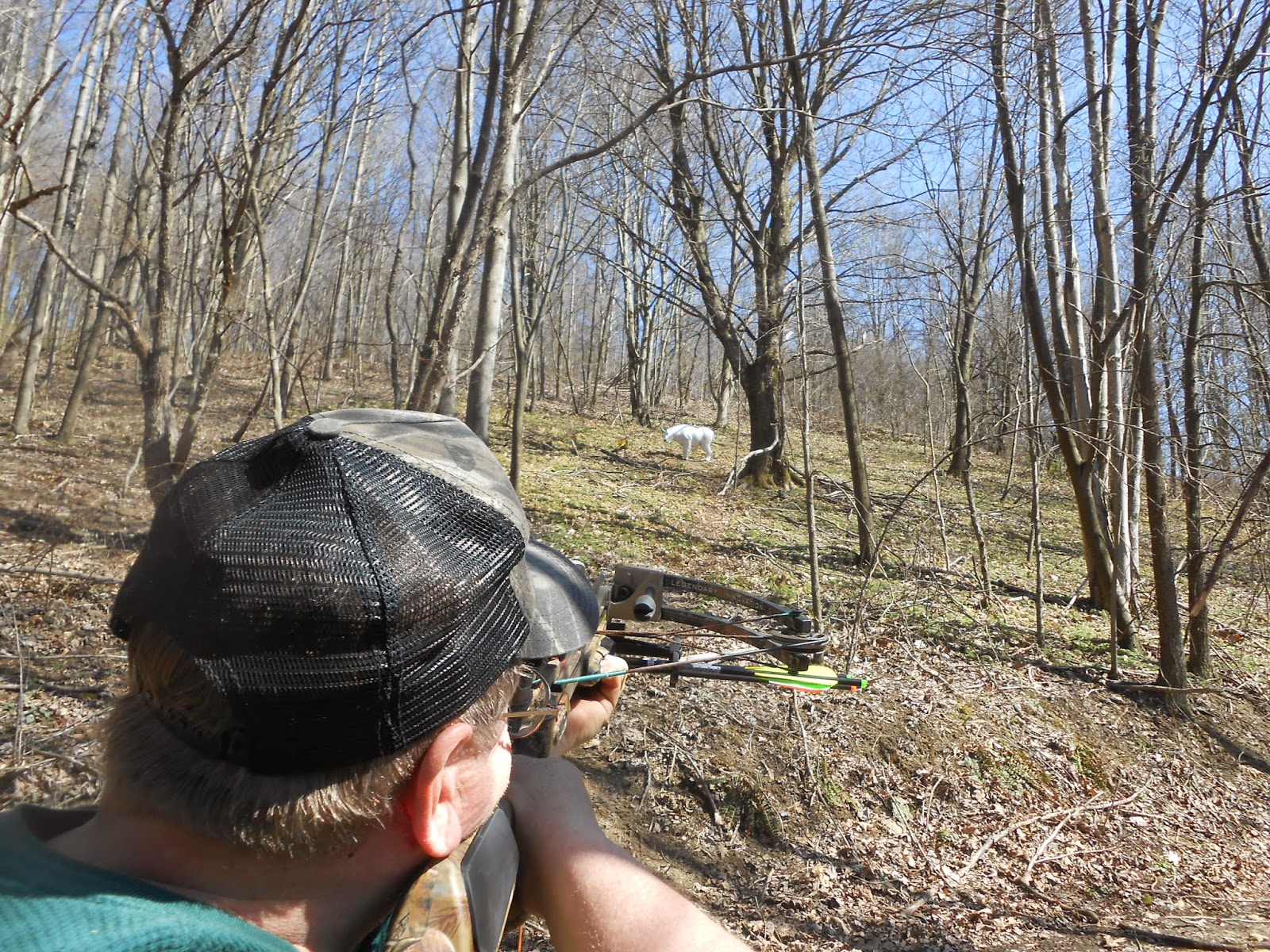
As always, we encourage all ages and skill levels to come out and participate. And yes, cross bows and traditionals are welcome. 

Saturday, February 27, 2016

2016 Bull Creek 3-D Archery Schedule

Here is the schedule for the 2016 season. 

April 10th
May 15th
June 19th
July 17th
August 21st
September 18th


TRADITIONAL

COMPOUND

CROSSBOW

30+ Targets

Food and Beverages Available
             
Registration 9:00-2:00


Adults $10.00    Youth Under 16 $5.00

Bull Creek members who would like to help and earn work parties:
Saturday late afternoon/evening we setup the shooting stakes and organize animals. Sunday morning we usually get there around 7-730 to setup.
We start to takedown around 3.


Kitchen will be open

As always, we encourage all ages and skill levels to come out and participate. And yes, cross bows and traditionals are welcome. 

Thursday, October 1, 2015

Statewide PA Archery Season Starts October 3rd

               Pennsylvania Game Commission wishes bowhunters safe days afield.
          Pennsylvania’s archery deer season begins Saturday, Oct. 3, and its return is prompting the Pennsylvania Game Commission to issue some helpful reminders. 

          Archers statewide can hunt for antlered or antlerless deer from Oct. 3 to Nov. 14, and during the late archery deer season, which runs from Dec. 26 to Jan. 9. 


At the time of the statewide opener, archery hunters in three urbanized areas of the state will have had a two-week head start to their seasons. An early season for antlered and antlerless deer was implemented in Wildlife Management Units 2B, 5C and 5D, and that season kicked off on Sept. 19.


Properly licensed bowhunters in WMUs 2B, 5C and 5D, also may take antlered and antlerless deer during an extended late archery season, which runs from Jan. 11 to Jan. 23.


Archery hunters may use long, recurve or compound bows, or crossbows. Bows must have a draw weight of at least 35 pounds; crossbows must have a minimum draw weight of 125 pounds. 


The Game Commission encourages hunters to spend as much time as possible afield this fall prior to and during the hunting seasons to pattern deer movements and identify areas where fall foods are abundant.


“Those hunters who, during the preseason, thoroughly scouted the areas they hunt, greatly improve their chances at early season success,” said Game Commission Executive Director R. Matthew Hough. “And when the season begins, there’s simply no substitute for getting out there and seeing for yourself what’s happening in the deer woods, and having a great time doing it.” 


Bowhunters are urged to take only responsible shots at deer to ensure a quick, clean kill. For most, that’s a shot of 20 yards or less at a deer that is broadside or quartering away. Archery and crossbow hunters should shoot only at deer that are within their maximum effective shooting range – the farthest distance from which a hunter can consistently place arrows or bolts into a pie pan-sized target.


Hunters may use illuminated nocks for arrows and bolts; they aid in tracking or locating the arrow or bolt after being launched. However, transmitter-tracking arrows still are illegal.


Tree stands and climbing devices that cause damage to trees are unlawful to use or occupy unless the user has written permission from the landowner. Tree stands – or tree steps – penetrating a tree’s cambium layer cause damage, and it is unlawful to build or occupy tree stands screwed or nailed to trees on state game lands, state forests or state parks. 


Hunters are reminded portable hunting tree stands and blinds are not permitted on state game lands until two weeks before the opening of the archery deer season, and they must be removed no later than two weeks after the close of the flintlock and late archery deer seasons in the WMU being hunted. 


Tree stands placed on state game lands also must be conspicuously marked with a durable identification tag that identifies the stand owner. Tags may include the owner’s name and address, the CID number that appears on the owner’s hunting license, or a unique identification number issued by the Game Commission. Identification numbers can be obtained at The Outdoor Shop on the Game Commission’s website.
Safety tips for bowhunters·                          Make sure someone knows where you’re hunting and when you expect to return home. Leave a note or topographic map with your family or a friend. Pack a cellular telephone for emergencies.


·                          Always use a fall-restraint device – preferably a full-body harness – when hunting from a tree stand. Wear the device from the moment you leave the ground until you return. Don’t climb dead, wet or icy trees. Stay on the ground on blustery days. Keep yourself in good physical condition. Fatigue can impact judgment, coordination and reaction time, as well as accuracy.


·                          Always carry a whistle to signal passersby in the event you become immobile. A compass and matches or lighter and tinder also are essential survival gear items to have along. An extra flashlight bulb also can be helpful.


·                          Use a hoist rope to lift your bow and backpack to your tree stand. Trying to climb with either will place you at unnecessary risk.


·                          Don’t sleep in a tree stand! If you can’t stay awake, return to the ground. ·                          Always carry broadhead-tipped arrows in a protective quiver.


·                           If you use a mechanical release, always keep your index finger away from the trigger when drawing.


·                          Follow the manufacturer’s recommendations for all equipment and check your equipment before each use.


·                          Practice climbing with your tree stand before dawn on the opening day of the season. Consider placing non-slip material on the deck of your tree stand if it’s not already there.

  ·                          Never walk with a nocked, broadhead-tipped arrow or bolt.

·                          Cocked crossbows should always be pointed in a safe direction.

Hunting in Disease Management Areas          Archers hunting and harvesting deer within any of the state’s three Disease Management Areas (DMAs) must comply with special rules aimed at slowing the spread of chronic wasting disease (CWD) in Pennsylvania. 


High-risk deer parts include multiple tissues in the head (brain, tonsils, eyes, and lymph nodes), the backbone/spinal cord, spleen, upper canine teeth (if root structure is present), and any object or article containing visible brain or spinal cord. These tissues are where the CWD prion accumulates to high concentrations and these may not be transported outside the DMA.


Parts that are safe to move include meat, without the backbone; the skull plate with attached antlers, if no visible brain or spinal cord material is present; tanned hide or raw hide with no visible brain or spinal cord material present; the cape, if no visible brain or spinal cord material is present; the upper canine teeth, if no root structure is present; or finished taxidermy mounts.


Harvested deer can be taken to a cooperating taxidermist or deer processor associated with a specific DMA, and the processed meat and/or finished taxidermy mounts may be removed from the DMA when ready. 


Successful hunters who intend to do their own processing and who need to transport deer meat or other low-risk parts outside a DMA may stop by one of the many high-risk parts disposal sites established within the DMAs.


A list of those sites and their exact addresses or GPS coordinates are available on the CWD information page at the Game Commission’s website,
www.pgc.state.pa.us. Lists of cooperating processors and taxidermists also are available on that page.


          Successful hunters who live in a DMA also may use the high-risk parts disposal sites, but those hunters can also dispose of high-risk parts by bagging them with household trash and sending them for disposal to a regulated landfill. 


Regardless the method of disposal, hunters are asked to do their part to make sure high-risk parts end up in a regulated landfill, and off the landscape and away from free-ranging deer. Because CWD can be passed from deer to deer through direct as well as indirect contact, and because the prion that causes CWD can remain infectious for years in the soil, hunters should understand that dumping deer carcasses or high-risk parts on the landscape only increases the risk of spreading CWD.


The state’s three DMAs are the result of deer in those areas testing positive for CWD, which is 100-percent fatal to deer and elk, but is not known to be transmitted to humans. 


DMA 2, which encompasses about 2,400 square miles in Bedford, Blair, Cambria, Fulton, Huntingdon and Somerset counties, is the only DMA in which CWD has been detected in free-ranging deer in Pennsylvania.
          
DMA 1, which encompasses 600 square miles in York and Adams counties; and DMA 3, which totals about 350 square miles in Jefferson and Clearfield counties, each were established after CWD was detected in captive deer. To date, surveillance for CWD in free-living deer in these areas has not identified any positives.  Maps detailing the perimeters of the DMAs also are available at the Game Commission’s website.
          
Hunters within DMA 2 are reminded the DMA boundary has expanded again this year.
          
And hunters everywhere should be aware that the boundaries of Disease Management Areas can and do change due to new cases of CWD. For the most up-to-date information on CWD, including updated DMA maps, visit the Game Commission’s website.
          
More information on CWD is available at the Game Commission’s website.

Saturday, March 21, 2015

2015 Bull Creek 3-D Archery Schedule and Details!

Here is the schedule for the 2015 season. 

April 19th
May 17th
June 21st
July 12th
August 16th
September 20th


TRADITIONAL

COMPOUND

CROSSBOW

30+ Targets

Food and Beverages Available
             
Registration 9:00-2:00


Adults $10.00    Youth Under 16 $5.00


Kitchen will be open

As always, we encourage all ages and skill levels to come out and participate. And yes, cross bows and traditionals are welcome. 

Wednesday, March 18, 2015

Bull Creek 3-D Program Hoping For Big Year

By Bob Frye.

 
There was a time when the 3-D archery program at Bull Creek Rod and Gun Club was as active as any.

That disappeared for a long while.

There's an effort underway
to change that, though. The Tarentum club, led by members Jason Siefried and Bill Norris, re-initiated a 3-D program on a small scale in 2013. It ramped things up a bit last year and is looking to really grow it starting this spring.

“It's been a lot of work getting to the point where we are now,” Siefried said. “But we keep doing better and better every season.”

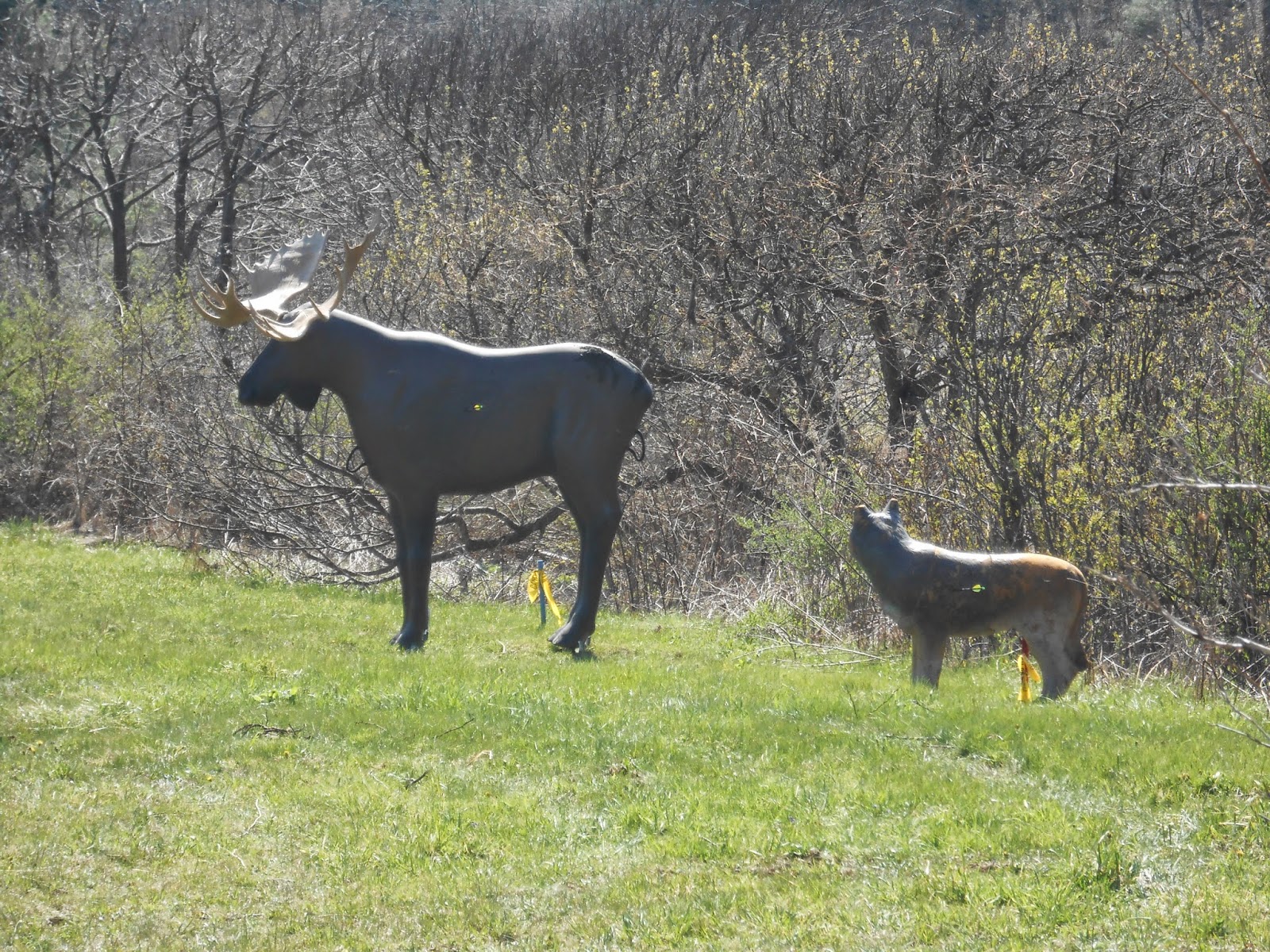
Indeed, a few years back, they had just a few old targets to offer shooters. Now the club has 36 or so, including whitetails, standing and bedded elk, caribou, bears, a raccoon, groundhog, porcupine, moose, and a dinosaur that's proven popular with young shooters.

There's even an alligator that came in especially handy last year.

“We had a small pond, so we stuck some duck decoys out there and had the alligator positioned like it was sneaking into the water after them,” Norris said. “The kids just wanted to shoot at it all day. They had a ball.”

The club will offer six shoots, one a month from April through September. They're open to all archers, including those with crossbows.

The course will vary from time to time, with whitetail targets placed to replicate actual hunting scenes dominant at the last one, to help archers get tuned up for bow season, Norris said.

In time, the club may even try to start a 3-D league, or host an International Bowhunting Organization shoot.

That's down the road, though, Siefried said.

For now, the emphasis is on getting shooters — and especially kids — out with their bows, and coming to Bull Creek.

“It seems like every shoot, we're drawing in a few more people, so the snowball's kind of growing,” he said.

Bob Frye is a staff writer for Trib Total Media. Reach him at bfrye@tribweb.com or via Twitter @bobfryeoutdoors

Sunday, February 8, 2015

Congress Revives Sportsmen's Act

Despite Washington gridlock, some senate Republicans and Democrats have agreed for three years on at least one thing.

Last week a wide-ranging coalition introduced the Sportsmen's Act of 2015, sort of an expanded reprise of similar bills introduced -- and defeated -- in each of the past three congresses. The bill is designed to improve conditions for hunting, fishing, target shooting and other outdoor recreation.

Written with bipartisan support, the current Sportsmen's Act would permanently strip the Environmental Protection Agency from regulating lead shot and other ammunition under the Toxic Substances Control Act, and add lead sinkers and other fishing gear to the existing exemption.

Regulatory authority would be transferred to the U.S. Fish and Wildlife Service and state fish and wildlife agencies.

Among the bill's 14 provisions are mandates to allow gun owners to carry firearms on lands managed by the Army Corps of Engineers, and permit archers to carry bows across national parks.

The bill would direct up to $10 million annually toward improving access to landlocked public lands, allocate a larger proportion of existing federal funding to building and maintaining shooting ranges on federal and non-federal lands, and require federal land managers to consider how their plans may impact hunting, fishing and recreational shooting.

Remaining from previous versions of the bill is a provision that would allow the importation of polar bear trophies harvested legally in Canada. The bill was introduced by senators Lisa Murkowski, R-Ark., and Martin Heinrich, D-N.M. with original sponsorship by Joe Manchin, D-W.Va., Jim Risch, R-Ind., Deb Fischer, R-Neb., and Heidi Heitkamp, D-N.D.

"This comprehensive package will boost opportunities for hunters, anglers, outdoor enthusiasts and conservationists alike, improve access to federal lands and strengthen the overall outdoor recreation industry," Sen. Manchin said in a written statement.

"As co-chairman of the Congressional Sportsmen's Caucus and an avid sportsman, it makes me so proud that we can come together as Democrats and Republicans to preserve America's beloved outdoor traditions."

The bill is supported by outdoors groups including the National Wild Turkey Federation, National Rifle Association, Trout Unlimited and Theodore Roosevelt Conservation Partnership.
Efforts are underway to both block the bill -- again -- and to introduce a similar measure in the House.

Sunday, November 30, 2014

21st Century Has Become Golden Era For Big Game Trophy Bucks

By Bob Frye

The numbers tell the tale: the 21st century has been a historically great time to be a big buck hunter.

The Boone and Crockett Club has tracked big game trophies since 1830. Its record book includes 14,042 whitetails.

It took 185 years, from 1830 to 1999, for hunters to take the first 6,883 of those. That's 49 percent of the total. It's taken them less than 15 years to add the remaining 7,159, or 51 percent.

“It's 100 percent true, the years since 2000 or so have been the golden age of white-tailed deer,” said Justin Spring, assistant director of big game records for the Boone and Crockett Club.

That's been the case all across the country.

The top five whitetail states, by record book entries — Wisconsin, Illinois, Iowa, Minnesota and Kentucky, respectively — all have seen significant jumps in trophy numbers.

Sixty-four percent of Kentucky's “Booners” have been harvested since 2000. It has been 59 percent in Wisconsin, 57 in Illinois, 48 in Iowa and 33 in Minnesota. Ohio, just outside the top five in total entries, put 70 percent of its bucks in over that time.

Similar things have occurred throughout the Northeast. Pennsylvania, for example, could only claim 86 Boone and Crockett bucks going into this season, but 66 percent of them were killed since 2000. Maryland put 50 percent of its bucks in the book since then, New York 48 percent and West Virginia 43 percent.

Credit for much of that here goes to antler restrictions, said Bob D'Angelo, big game records coordinator for the Pennsylvania Game Commission.

Before 2002, hunters could shoot any buck with at least one antler measuring 3 inches long.
Now a buck must have either three or four points on one antler to be legal.

That's made a dramatic difference, D'Angelo said.

“Yeah, we've noticed that. Maybe the last 10 years or so for us, the record book numbers have really increased,” he said.

Brian Murphy, executive director of the Quality Deer Management Association, said hunters all over America are letting bucks live longer, whether required to by regulation or not. The days of shooting any deer with antlers “as tall as a pack of cigarettes” are largely gone, he said. That more than anything is behind the surge in record book entries, he said.

“The culture's just changed. It's a very different world,” Murphy said.

The rise in record book bucks also can be credited to the sheer number of deer available and, to a lesser extent, more awareness of the record book, he added.

If there's any cautionary news, it's that the number of record book entries Boone and Crockett received last year was way down.

“2013 was an epic tank. I mean, it was a total fail,” Spring said.

Some areas of the country, even some of the “bread and butter” states of the Upper Midwest, saw an 80 percent decline in the number of big bucks they produced compared to prior years, he said.

That continued a bit of a recent trend. Spring said the number of record book entries, while still running ahead of decades past, has plateaued since about 2010.
There are a lot of theories as to why.

Some blame predators, Spring said. Others point to loss of habitat or habitat degradation.
A couple of really nasty winters might also have played a role.

Disease is another possibility. Outbreaks of EHD, or epizootic hemorrhagic disease, in 2007 and 2012, either of which alone would have represented a once-in-50-years event, killed a lot of deer nationwide, Murphy said.

The result is deer numbers are down from a record high of 32 million a few years ago to about 26 million now.

Spring is “cautiously optimistic” the number of record book entries is climbing again, though, based on applications he's received so far this fall.

He's hopeful last year was “just a blip.”

“My gut is telling me that we're going to have a better year in 2014, but we won't know for sure until March or April, when most of the records we'll get have come in,” he said.

Bob Frye is a staff writer for Trib Total Media. Reach him at bfrye@tribweb.com or via Twitter @bobfryeoutdoors.