

Thursday, December 30, 2010


Tuesday, December 21, 2010
Register Now for Bull Creek's March 2011 Hunter Safety Course

Youth Hunter Nabs Early Christmas Gift
By Bob Frye, TRIBUNE-REVIEW
Tuesday, December 21, 2010
Sometimes, if you peek in the right closet or other hiding place, you can see what you are getting for Christmas before the holiday actually arrives.
 Hanna Harris of Northumberland County experienced that this year, sort of
The 16-year-old lives and hunts on her family's farm, near Danville. She was in a treestand on opening day of the firearms deer season this year, armed with a .280 rifle. She'd killed two bucks in previous years, but this was her first time hunting alone.
A buck wandered by and she shot it -- and has been getting all kinds of attention since, given the deer's tremendous size. The 15-point, with one of its beams seemingly split, figures to rank high in the history of deer taken in the state.
To qualify for an official Boone & Crockett Club score, a deer's rack must go through a 60-day drying period, starting at the time the skull plate was removed from the deer. It's already been green-scored, however. According to Hanna's father, Joe Harris, the deer came at 210 3/8 nontypical and 181 typical.
"We do try to only harvest mature bucks, but this was over the top," he said.
Bob D'Angelo, associate editor of the Pennsylvania Game Commission's "Game News" magazine and an official scorer, told Hanna's father in an e-mail that the buck is the best he's seen taken this year.
"As far as I can tell (from a photo,) typical would be the way to go with the measurement, but I'd have to see the rack in person," De'Angelo wrote. "Either category, this buck should end up in the top seven in the state."
The day Hanna shot the deer was not the first that she ever saw it. Her father said that family had photos of the deer on trail cameras. It seems everyone is using cameras these days, which is why it's not surprising there's even a book out now on them.
Published by the Quality Deer Management Association, the 12-chapter book ($24.95 at www.QDMA.com or 800-209-3337) promises to teach hunters not only how to capture pictures of deer, but to use the information to predict their seasonal movements, identify home ranges and increase hunting success.
"Trail-camera surveys are simply the most powerful deer management tool you can use that doesn't require professional assistance," said QDMA's Lindsay Thomas Jr. "Surveys can reveal deer density, sex ratios, age structure of bucks, and even the impact of predators on fawn recruitment."
The book even includes information on how to keep your cameras safe from thieves who would steal them.
The book won't guarantee you a buck, but, as Hanna Harris showed, cameras can tell you what you might have to look forward to.
Tuesday, December 21, 2010
Sometimes, if you peek in the right closet or other hiding place, you can see what you are getting for Christmas before the holiday actually arrives.

The 16-year-old lives and hunts on her family's farm, near Danville. She was in a treestand on opening day of the firearms deer season this year, armed with a .280 rifle. She'd killed two bucks in previous years, but this was her first time hunting alone.
A buck wandered by and she shot it -- and has been getting all kinds of attention since, given the deer's tremendous size. The 15-point, with one of its beams seemingly split, figures to rank high in the history of deer taken in the state.
To qualify for an official Boone & Crockett Club score, a deer's rack must go through a 60-day drying period, starting at the time the skull plate was removed from the deer. It's already been green-scored, however. According to Hanna's father, Joe Harris, the deer came at 210 3/8 nontypical and 181 typical.
"We do try to only harvest mature bucks, but this was over the top," he said.
Bob D'Angelo, associate editor of the Pennsylvania Game Commission's "Game News" magazine and an official scorer, told Hanna's father in an e-mail that the buck is the best he's seen taken this year.
"As far as I can tell (from a photo,) typical would be the way to go with the measurement, but I'd have to see the rack in person," De'Angelo wrote. "Either category, this buck should end up in the top seven in the state."
The day Hanna shot the deer was not the first that she ever saw it. Her father said that family had photos of the deer on trail cameras. It seems everyone is using cameras these days, which is why it's not surprising there's even a book out now on them.
Published by the Quality Deer Management Association, the 12-chapter book ($24.95 at www.QDMA.com or 800-209-3337) promises to teach hunters not only how to capture pictures of deer, but to use the information to predict their seasonal movements, identify home ranges and increase hunting success.
"Trail-camera surveys are simply the most powerful deer management tool you can use that doesn't require professional assistance," said QDMA's Lindsay Thomas Jr. "Surveys can reveal deer density, sex ratios, age structure of bucks, and even the impact of predators on fawn recruitment."
The book even includes information on how to keep your cameras safe from thieves who would steal them.
The book won't guarantee you a buck, but, as Hanna Harris showed, cameras can tell you what you might have to look forward to.
Wednesday, December 8, 2010
86-Year-Old Pa. Man Hunts From Recliner, Bags Buck

by MICHAEL RUBINKAM Associated Press
ALLENTOWN, Pa. December 7, 2010 (AP)
Lester Warner left the hospital in a weakened state last
month, his frail body wracked by late-stage cancer. At 86 years old, he and his family had decided to stop teatment. But that didn't mean he planned to stop hunting.
Pennsylvania's highly anticipated two-week rifle deer season was fast approaching, and the lifelong hunter from Dover Township, about 30 miles south of Harrisburg, wanted to take to the woods one last time.
"He just assumed he would be going. We decided we were going to play along with it: 'Yeah, we can't wait for hunting season, Dad,'" recalled Warner's son, Brian.
Brian and his brother Scott were skeptical. But when their father started to rally — gaining strength with the help of a physical therapist — they decided they had better accommodate him, said Brian, 51.
So Brian lugged an old recliner up the side of Broadtop Mountain, near his Huntingdon County dairy farm, to the small hut the family had built for Les Warner years ago. His father would hunt in comfort.
It was 19 degrees as the sun rose on opening day last week, the valley floor white with frost. Warner eased his old man's frame into the recliner, sipped his coffee, and waited, armed with the .243 Winchester that Brian had selected for its mild recoil.
It wasn't long before a huge 8-point buck emerged from the woods, the biggest that Warner or his son had ever had the opportunity to take. They marveled at their good fortune. A hunter can go days without seeing a buck.
"Well, shoot it," Warner told Brian.
"No, you're gonna shoot it," his son replied.
Warner stood up from the recliner and took aim. The buck bolted. He followed it for 80 or 90 yards. Then, as it slowed down, he pulled the trigger.
A perfect shot.
Lowering the gun, Warner turned to his son and said: "Never give up."
"That's right, Dad."
Brian called his mother. Shirley Warner could scarcely believe it.
"Knowing what he's been through in the last six months, in and out of the hospital, radiation and chemo and physical therapy and really sick at times, I was shocked. In my wildest dreams I didn't think he would get a buck this year," said Shirley, who's been married to Les for 53 years. "My son and I cried because it was a miracle ... there's no other explanation."
A week later, the retired pretzel baker remains thankful.
"I know I've had many blessings through this situation," said Les Warner, whose story was first reported by the York Daily Record. "Everything seems to be turning out well for me, and I know the Lord's been with us."
month, his frail body wracked by late-stage cancer. At 86 years old, he and his family had decided to stop teatment. But that didn't mean he planned to stop hunting.
Pennsylvania's highly anticipated two-week rifle deer season was fast approaching, and the lifelong hunter from Dover Township, about 30 miles south of Harrisburg, wanted to take to the woods one last time.
"He just assumed he would be going. We decided we were going to play along with it: 'Yeah, we can't wait for hunting season, Dad,'" recalled Warner's son, Brian.
Brian and his brother Scott were skeptical. But when their father started to rally — gaining strength with the help of a physical therapist — they decided they had better accommodate him, said Brian, 51.
So Brian lugged an old recliner up the side of Broadtop Mountain, near his Huntingdon County dairy farm, to the small hut the family had built for Les Warner years ago. His father would hunt in comfort.
It was 19 degrees as the sun rose on opening day last week, the valley floor white with frost. Warner eased his old man's frame into the recliner, sipped his coffee, and waited, armed with the .243 Winchester that Brian had selected for its mild recoil.
It wasn't long before a huge 8-point buck emerged from the woods, the biggest that Warner or his son had ever had the opportunity to take. They marveled at their good fortune. A hunter can go days without seeing a buck.
"Well, shoot it," Warner told Brian.
"No, you're gonna shoot it," his son replied.
Warner stood up from the recliner and took aim. The buck bolted. He followed it for 80 or 90 yards. Then, as it slowed down, he pulled the trigger.
A perfect shot.
Lowering the gun, Warner turned to his son and said: "Never give up."
"That's right, Dad."
Brian called his mother. Shirley Warner could scarcely believe it.
"Knowing what he's been through in the last six months, in and out of the hospital, radiation and chemo and physical therapy and really sick at times, I was shocked. In my wildest dreams I didn't think he would get a buck this year," said Shirley, who's been married to Les for 53 years. "My son and I cried because it was a miracle ... there's no other explanation."
A week later, the retired pretzel baker remains thankful.
"I know I've had many blessings through this situation," said Les Warner, whose story was first reported by the York Daily Record. "Everything seems to be turning out well for me, and I know the Lord's been with us."
Tuesday, December 7, 2010

Sunday, December 5, 2010
Good Article On Hunting Ethics
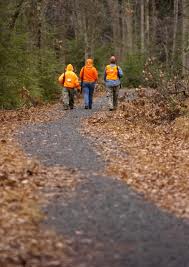
The is from the Pittsburgh Post-Gazette written by John Hayes:
Conflicted Hunting
On busy hunting grounds safety, courtesy and common sense resolve disputes
Sunday, December 05, 2010
A busy day in the field. Conflict resolution among hunters is easiest when they avoid awkward situations in the first place.I was in a good spot on a weedy cut dipping into a saddle where I expected deer to cross about 100 yards from my position. After about an hour, another hunter stopped at the crest of the facing hill, facing me. I signaled my presence with my hat, but he didn't reply. I thought he'd move on when he saw me but he stayed, watching for deer in the same shallow valley that I was hunting.
I put a range finder on the guy -- he was 265 yards from my spot. Each of us was using a shotgun firing heavy rifled slugs likely to drop within that distance. But taking a shot would have meant intentionally firing in the direction of another hunter. I had signaled, he didn't signal back. I got there first, but neither of us owned the property.
Who was right?
It can get crowded in parts of Penn's Woods, where more than 750,000 license holders share a shrinking space that's open to hunting, With that kind of traffic conflicts are inevitable. But there's no rule book, no Ten Commandments of Hunting Etiquette, dictating ways to prevent and resolve conflicts in the field.
"You can't do it with 'Thou shall' and 'Thou shalt not,' " said Jim Posewitz of Orion: The Hunter's Institute, a hunting ethics leadership group. "There's got to be a courtesy that goes both ways."
Jerry Feaser, spokesman for the Pennsylvania Game Commission, said it's "rare, very rare," for hunting disputes to escalate to violence, and when they do it's a police matter. Most conflicts, he said, can be preempted by putting an emphasis on safety, courtesy and common sense.
"It's about situational awareness, knowing what lies between you and your intended target and beyond," said Feaser. "The Game Commission doesn't have stipulations on how far hunters are to be apart, things like that. There's nothing in the regulations or laws."
Some common conflicts:
• You shoot once and the buck goes down, but you discover it has taken two shots. Another hunter approaches saying he hit it first and has been tracking. Whose gets the deer?
This one is clearly defined in the state Game Code: "The carcass of game or wildlife lawfully killed or taken shall be the property of the person who inflicts a mortal wound which enables that person to take possession of the carcass." Paragraph B seems particularly wise: "No [Game Commission officer] shall be called upon to arbitrate any dispute concerning the ownership of game or wildlife or to testify concerning any such dispute."
• You're part of an organized drive, standing on post as members of your party push deer your way. A stranger posts himself in position to intercept those deer. What do you do?
"I'd have no problem going up to someone and telling him there's a drive going on in this area," said Buddy Savage, long-time owner of Braverman Arms in Wilkinsburg. "It's for his safety also, because the guys driving don't know he's there."
If the interloper won't budge, Savage said the smart thing to do is back down.
"You don't know who you're dealing with, and a deer is simply not worth getting aggressive about," he said. "You meet someone like that, just walk away."
• You legally shoot a deer that runs onto private property and dies. The landowner denies you access to the property. Do you have a right to retrieve that deer?
No. Private property is, well, private and criminal trespass is a civil violation. The landowner, however, doesn't have a right to claim that deer.
"Our officers have authority to take possession of game in situations where the animal died on someone's property," said Feaser. "But they're not obligated to do it, either. It's up to the officer's discretion."
• You arrive at your tree stand and find someone hunting at the base of the tree. Who gets that spot?
Hanging a tree stand does not entitle a hunter the exclusive right to hunt that spot. That said, it's considered a courtesy to move along when the stand owner arrives. In all cases, property owners have the final say.
• In my hunting-zone quandary, with another hunter hunting the same spot from a relatively safe distance, who's right?
"With some of the new slugs on the market you can shoot proficiently at 100 yards," said Savage. "That slug may travel 200 to 300 yards total without much velocity at distance, but it's a weighty slug -- enough to injure a person even that far out. Rule of thumb: If anybody is in view, don't shoot. No shot is acceptable that's even the slightest bit risky -- hunting just isn't that important."
Posewitz, whose 2001 book "Beyond Fair Chase" (Falcon) dealt with ethical hunting, said it all goes back to the hunter's mantra.
"Be sure of your background," he said. "I handle everything the same way, that is to appreciate the privilege of hunting in a democracy and the North American model of wildlife conservation, which holds that wildlife belongs to the people and conflicts can be resolved in a democratic fashion.
Wednesday, December 1, 2010
2011 Winter Trap League Schedule Posted

Sunday, November 28, 2010
Good Luck Hunters!


Thursday, November 25, 2010
Bear's Demise Leaves A Trail Of Questions
Thursday, November 25, 2010
By John Hayes, Pittsburgh Post-Gazette
Bozo the bear is gone, but that's not half the story.
The man who illegally fed pastries to the bruin for 17 years is in mourning. The hunter who legally shot him is grousing about the questions that have been raised over his potential record kill. And across the country people are debating Bozo's death, the line separating humans and wildlife and the consequences when that line is crossed.
On Nov. 15, crossbow archer David Price of Barrett Township, Monroe County, and five companions shot a massive black bear at Delaware Water Gap National Recreation Area in northeastern Pennsylvania. Estimated to weigh 879 pounds it was confirmed the heaviest black bear on record in the state -- 15 pounds heavier than the previous record set in 2003 with another Pike County bear. Word from the Pennsylvania Game Commission weighing station was it could be the heaviest black bear anywhere.
News soon spread through the nearby Fernwood Resort, a 440-acre Pocono Mountain retreat, that the dead bear was Bozo, a neighborhood attraction who had been fed and raised like a pet by former resort groundskeeper Leroy Lewis.
"I'm just devastated," Mr. Lewis, 71, told the Stroudsburg Pocono Record. "I feel like I lost a friend. I fed him for 17 years and I raised him from a cub. He loved doughnuts and anything sweet."
Intentionally feeding bears and elk is illegal in Pennsylvania. Working on a tip from a concerned citizen, the Game Commission issued an official warning to Mr. Lewis to stop feeding the bear on Sept. 23. He complied, but Bozo continued hanging around, knocking on Mr. Lewis' door when he wanted a snack.
On the opening of Pennsylvania's five-day archery bear season, Mr. Price got a tip that the huge bear was seen at Delaware Water Gap, and within hours Bozo was history.
But not the kind of history the hunter expected -- the bear's incredible weight is not a viable criterion for determining the record.
"Record status is determined by skull size," said Game Commission spokesman Jerry Feaser. "Weight can vary according to food availability, but the size of the skull doesn't change. [The skull] will be cleaned, and after a 60-day drying time it will be measured for the record."
The largest black bear skull on record is 23 inches. Bozo was unnaturally rotund, to be sure, but his skull size may not come close to cracking the record.
Mr. Lewis had stopped feeding the bear in September, so there's no accusation that Mr. Price's trophy had been baited, which is illegal in Pennsylvania. But because Bozo had been trained to approach people for food, some hunters on Internet chat sites are cracking wise about Mr. Price's "trophy pet."
"This may be the peak of my hunting career, and it's tainted, it really is," he told the Pocono Record.
Having endured a week of reporters, neither Mr. Price nor Mr. Lewis was taking phone calls as news of the kill spread across the country, and the Web buzz morphed into a larger debate about what biologists call the "habituation" of wild animals.
"We have a saying in wildlife management -- a fed bear is a dead bear," said Mr. Feaser. "When people feed wildlife and treat them like pets, they become habituated to humans. They're less wary and may even approach people, expecting to be fed. That will often put the animal at higher risk of vehicle collision, of becoming a nuisance by getting into people's garbage and bird feeders, or even approaching other humans, assuming they'll find food."
There's little harm in feeding songbirds and squirrels, so long as the feeding never stops and becomes a permanent part of the local ecosystem. But larger animals capable of harming people are different. If they don't get food as expected, habituated animals can become confused and aggressive, frightening or even harming people.
"It's not only bears," said Mr. Feaser. "In 2006 in Clinton County, two older people were gored nearly to death by a white-tailed buck that had been hand-fed as a fawn. It had become habituated to humans. In the rut when it didn't get fed, it reacted."
Mo Brown, an animal keeper and bear expert at Pittsburgh Zoo and PPG Aquarium, said Bozo's habituation contributed to its death.
"Whenever you start feeding wild animals, it's always the animals that pay," he said. "The people get a slap on the wrist." Mr. Brown said Bozo's situation was bad in more ways than one.
"First, the bear ends up dead. That is not uncommon in habituation situations," he said. "Second, look at what that bear was eating. It wasn't record size because it was naturally large -- this bear got fat and probably lazy. Instead of foraging as it should, he was eating doughnuts all his life. Because it was habituated and trained to expect food from people, this poor bear probably walked right up to the guy who killed it."
No necropsy is planned -- Bozo will probably become a big rug or a giant mount -- but Mr. Brown said the bear's corpulence likely caused health problems and discomfort.
"I didn't see the bear, but it was probably in pretty bad shape," said Brown, who has worked at the zoo in various jobs for 40 years. "Clogged arteries, circulation problems. Being so heavy puts pressure on circulation, puts pressure on joints. Almost 900 pounds? Here's how heavy that bear was: At the zoo we have two black bears, one is a 26-year-old male that's considered pretty big. He's 577 pounds, and I'm bringing him down slowly. He could stand to lose 60 or 70 pounds."
Mr. Brown said Bozo's tragic saga illustrates why wild animals shouldn't be treated like pets.
"The point I'm making is: The guy shouldn't have been feeding him to begin with," he said. "He's been doing something wrong for 17 years, and the animal is dead because of him. People have to understand that."
John Hayes: 412-263-1991, jhayes@post-gazette.com.
First published on November 25, 2010 at 12:00 am
Read more: http://www.post-gazette.com/pg/10329/1106073-455.stm
By John Hayes, Pittsburgh Post-Gazette
Bozo the bear is gone, but that's not half the story.
The man who illegally fed pastries to the bruin for 17 years is in mourning. The hunter who legally shot him is grousing about the questions that have been raised over his potential record kill. And across the country people are debating Bozo's death, the line separating humans and wildlife and the consequences when that line is crossed.
On Nov. 15, crossbow archer David Price of Barrett Township, Monroe County, and five companions shot a massive black bear at Delaware Water Gap National Recreation Area in northeastern Pennsylvania. Estimated to weigh 879 pounds it was confirmed the heaviest black bear on record in the state -- 15 pounds heavier than the previous record set in 2003 with another Pike County bear. Word from the Pennsylvania Game Commission weighing station was it could be the heaviest black bear anywhere.
News soon spread through the nearby Fernwood Resort, a 440-acre Pocono Mountain retreat, that the dead bear was Bozo, a neighborhood attraction who had been fed and raised like a pet by former resort groundskeeper Leroy Lewis.
"I'm just devastated," Mr. Lewis, 71, told the Stroudsburg Pocono Record. "I feel like I lost a friend. I fed him for 17 years and I raised him from a cub. He loved doughnuts and anything sweet."
Intentionally feeding bears and elk is illegal in Pennsylvania. Working on a tip from a concerned citizen, the Game Commission issued an official warning to Mr. Lewis to stop feeding the bear on Sept. 23. He complied, but Bozo continued hanging around, knocking on Mr. Lewis' door when he wanted a snack.
On the opening of Pennsylvania's five-day archery bear season, Mr. Price got a tip that the huge bear was seen at Delaware Water Gap, and within hours Bozo was history.
But not the kind of history the hunter expected -- the bear's incredible weight is not a viable criterion for determining the record.
"Record status is determined by skull size," said Game Commission spokesman Jerry Feaser. "Weight can vary according to food availability, but the size of the skull doesn't change. [The skull] will be cleaned, and after a 60-day drying time it will be measured for the record."
The largest black bear skull on record is 23 inches. Bozo was unnaturally rotund, to be sure, but his skull size may not come close to cracking the record.
Mr. Lewis had stopped feeding the bear in September, so there's no accusation that Mr. Price's trophy had been baited, which is illegal in Pennsylvania. But because Bozo had been trained to approach people for food, some hunters on Internet chat sites are cracking wise about Mr. Price's "trophy pet."
"This may be the peak of my hunting career, and it's tainted, it really is," he told the Pocono Record.
Having endured a week of reporters, neither Mr. Price nor Mr. Lewis was taking phone calls as news of the kill spread across the country, and the Web buzz morphed into a larger debate about what biologists call the "habituation" of wild animals.
"We have a saying in wildlife management -- a fed bear is a dead bear," said Mr. Feaser. "When people feed wildlife and treat them like pets, they become habituated to humans. They're less wary and may even approach people, expecting to be fed. That will often put the animal at higher risk of vehicle collision, of becoming a nuisance by getting into people's garbage and bird feeders, or even approaching other humans, assuming they'll find food."
There's little harm in feeding songbirds and squirrels, so long as the feeding never stops and becomes a permanent part of the local ecosystem. But larger animals capable of harming people are different. If they don't get food as expected, habituated animals can become confused and aggressive, frightening or even harming people.
"It's not only bears," said Mr. Feaser. "In 2006 in Clinton County, two older people were gored nearly to death by a white-tailed buck that had been hand-fed as a fawn. It had become habituated to humans. In the rut when it didn't get fed, it reacted."
Mo Brown, an animal keeper and bear expert at Pittsburgh Zoo and PPG Aquarium, said Bozo's habituation contributed to its death.
"Whenever you start feeding wild animals, it's always the animals that pay," he said. "The people get a slap on the wrist." Mr. Brown said Bozo's situation was bad in more ways than one.
"First, the bear ends up dead. That is not uncommon in habituation situations," he said. "Second, look at what that bear was eating. It wasn't record size because it was naturally large -- this bear got fat and probably lazy. Instead of foraging as it should, he was eating doughnuts all his life. Because it was habituated and trained to expect food from people, this poor bear probably walked right up to the guy who killed it."
No necropsy is planned -- Bozo will probably become a big rug or a giant mount -- but Mr. Brown said the bear's corpulence likely caused health problems and discomfort.
"I didn't see the bear, but it was probably in pretty bad shape," said Brown, who has worked at the zoo in various jobs for 40 years. "Clogged arteries, circulation problems. Being so heavy puts pressure on circulation, puts pressure on joints. Almost 900 pounds? Here's how heavy that bear was: At the zoo we have two black bears, one is a 26-year-old male that's considered pretty big. He's 577 pounds, and I'm bringing him down slowly. He could stand to lose 60 or 70 pounds."
Mr. Brown said Bozo's tragic saga illustrates why wild animals shouldn't be treated like pets.
"The point I'm making is: The guy shouldn't have been feeding him to begin with," he said. "He's been doing something wrong for 17 years, and the animal is dead because of him. People have to understand that."
John Hayes: 412-263-1991, jhayes@post-gazette.com.
First published on November 25, 2010 at 12:00 am
Read more: http://www.post-gazette.com/pg/10329/1106073-455.stm
Wednesday, November 24, 2010
Sighting In Your New Deer Rifle
Sighting in your expensive new deer rifle
3. Bore sighting device..........................$140.00
4. Forgetting to remove the bore sighting device prior to actually shooting the thing?
Priceless........


5. Hospital Visit............$14,893.00

1. Shiny new, high-powered deer rifle............$1,200.00
2. Quality, high-powered scope.........................$550.003. Bore sighting device..........................$140.00
4. Forgetting to remove the bore sighting device prior to actually shooting the thing?
Priceless........


5. Hospital Visit............$14,893.00
Subscribe to:
Posts (Atom)