Sunday, October 2, 2016

Fish and Boat Commission spawning bass experiment


A decision made this past week may change the future of Pennsylvania fishing.
Next spring, the Pennsylvania Fish and Boat Commission is going to allow the state's organized bass anglers to hold a tournament or two on an inland lake during the bass spawn. If all goes well, the commission indicated, such events could become a regular part of the state's fishing scene.
That's a departure from existing rules.
Right now, springtime bass fishing — from April 16 through June 17 this year — is OK only on a catch-and-immediate-release basis, with no tournaments permitted.
That's meant to protect fish guarding eggs.
Andy Shiels, chief of the commission's bureau of fisheries, said some research shows that removing bass from nests on northern lakes leads to almost immediate predation by bluegills, rock bass and the like.
“I think our biggest concern as biologists, on the science side, would be removing those fish from their nests,” Shiels said.
Pennsylvania's ban on spring tournaments long has existed, with one notable exception. They are allowed on Pymatuning Lake, which straddles the Pennsylvania-Ohio border. No one with the Fish and Boat Commission or Ohio Division of Wildlife, which co-manage the lake, has suggested the fishery is suffering as a result.
Bass anglers have noticed.
“It gets hammered with fishing pressure, and still it just keeps getting better as a bass fishery,” said Ben Bilott of North Huntingdon, president of PA BASS Nation. “We're not sure how well a fishery is doing is really related to when fishing is occurring.”
Ohio fisheries officials agree.
Matt Wolfe, a biologist with the Division of Wildlife, said that agency allows bass tournaments during the spawn — on Pymatuning and all of its inland lakes — because they seem to cause no ill effects to bass on a population-level scale.
“It might seem like a lot of fish when you have a 100-boat field and each of them brings in six bass. OK, that's 600 bass,” Wolfe said. “But that's a drop in the bucket compared to how many spawning bass there might be in a population.
“From our standpoint, we don't see any implications.”
There's an economic side, too, said Josh Giran, vice president of PA BASS Nation. Right now, that organization travels out of state to hold springtime tournaments. Giran said competitors spend about $560 each, not counting fuel. Given the size of the typical field, he said that's putting $40,000 per event into the hands of others.
“I'd really like to keep it here in the state of Pennsylvania,” Giran said.
Fish and Boat Commissioners apparently agree. They directed agency staff to develop rules allowing springtime tournaments next year.
What form they'll take, where they might be held and how many would be allowed have yet to be determined.
Anglers may have to make concessions early on, however.
Shiels said staff is leaning toward requiring anglers to make any spawn season tournaments catch, photo and release events. That means competitors would have to weigh or measure fish right where they were caught, then immediately release them into the water rather than run them to a weigh-in station.
That's how most kayak bass tournaments are run these days, he said.
“I think that's the way of the future anyway,” Shiels said.
Such a rule probably would force a group like PA BASS Nation to run a springtime tournament as a benefit event rather than a qualifier, Bilott said.
“When there's money on the line, you can't allow for the chance of someone cheating, or even the perception that someone might be able to cheat,” he said.
But the group might be willing to start out that way to get this idea rolling, he added.
The commission's intent is not to allow unlimited bass fishing by all anglers during the spawn, board president Glade Squires said. It's looking to try this with just a few registered tournaments on some of the state's bigger lakes, like perhaps Raystown, as an experiment in cooperation with competitive anglers.
“I think there are ways we can work with them,” he said.
Bob Frye is a Tribune-Review staff writer. Reach him at bfrye@tribweb.com or via@bobfryeoutdoors.

Sunday, September 25, 2016

Pheasant program could go on chopping block without additional funding


Going, going ... maybe gone?
That could be the story with Pennsylvania's pheasants.


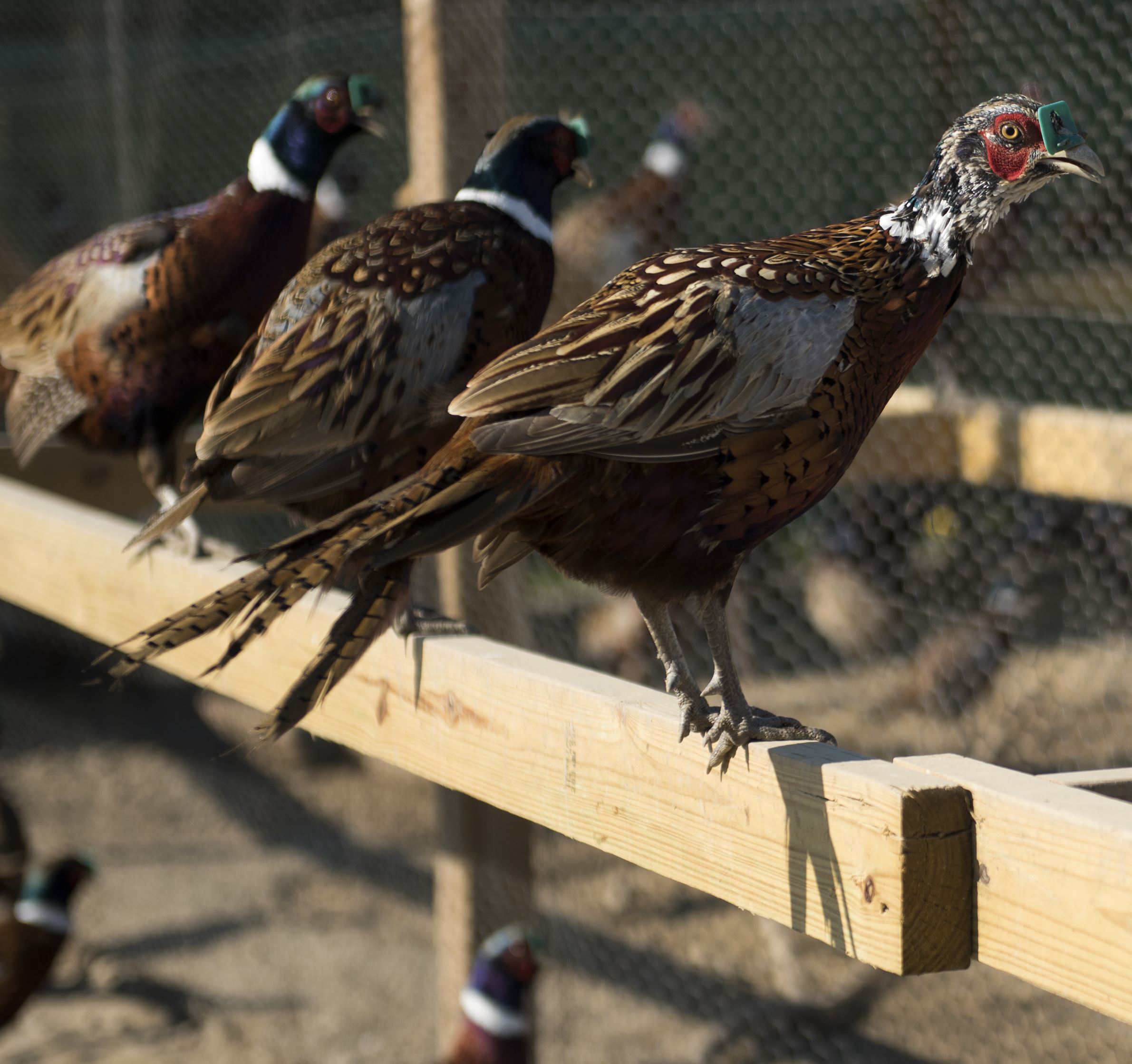
Wild birds — save for those reintroduced to mixed results in a few areas — long ago disappeared. In their place, the Pennsylvania Game Commission releases about 200,000 pen-reared birds a year for hunters.
But that program is in jeopardy.
The cost of a hunting license hasn't increased since 1999. The result is the commission is facing a $25 million budget deficit for fiscal year 2017-18, which begins July 1, said board president Brian Hoover of Delaware County. That's going to necessitate cutbacks, he said.
“There will be programs that will disappear, that will end,” Hoover said.
The pheasant program, which costs close to $5 million a year, could be one of those, he added. That would be felt a year from now.
The birds currently on the agency's game farms will be released as planned. Stockings will begin in time for the junior hunter pheasant season that begins Oct. 8. The statewide season opens Oct. 22.
That could be it, though.
If no additional revenue is forthcoming, the birds typically kept to produce next year's crop likely will be released, too, said commission deputy executive director Rich Palmer.
“There wouldn't be any sense in maintaining an overwintering flock if there's no intention of continuing the program,” Palmer said.

Commissioners have been looking to one piece of legislation to save the day.
Senate Bill 1166 would give the commission the authority — for the first time in its 120-plus-year history — to set its own fees. Right now, only lawmakers can adjust prices.
That bill cleared a hurdle this past week. Having passed the state Senate earlier this summer, Tuesday it was voted out of the House of Representatives game and fisheries committee. That sent it to the full House for consideration.
That body has 11 days left between Monday and Nov. 15 to approve it and send it to Gov. Tom Wolf for his signature.
Work on the bill has been ongoing for 20 months, said Rep. Keith Gillespie, a York County Republican who chairs the game and fisheries committee. Lawmakers who have shown a “lack of intestinal fortitude” in declining to raise license fees for nearly two decades must finally act, he said.
“We need to do it now,” Gillespie said.
Commissioners are hoping they will.
Development of the 2017-18 budget begins in October, Palmer said. Licenses good for the 2017-18 license year don't go on sale until June.
But if commissioners knew they could count on raising fees by then, they could commit to keeping the pheasant program operating, Hoover said.
And raise them they would, including in a new way.
Some have been calling for the commission to create a pheasant hunting stamp required of all those who hunt the stocked birds.
Dennis Duza, a retired commission employee, has been beating that drum for more than a year. He did so again at the board's meeting last week. He said the high cost of the program and the fact fewer hunters — about 10 percent of license buyers in 2014 — are pursuing pheasants makes a stamp a must.
“Short and brief, we need a pheasant stamp,” Duza said.
Board members initially rejected that idea, saying they wanted small-game hunters to be able to take birds incidentally if the opportunity arose.
A realization they need to be “smart with our dollars” has prompted a change of heart, said commissioner Tim Layton of Windber.
Hoover agrees and said a pheasant stamp likely is “in the cards” moving forward. It would be required only of the most dedicated hunters, though.
Commissioners are leaning toward allowing those who buy a general hunting license to take two pheasants a year, Hoover said. They would have to be tagged, just like a deer.
Hunters wanting to take additional birds would have to buy the stamp, Hoover said.
What it might cost has yet to be determined. The goal, though, is clear: to keep the pheasant program operating while considering the budget, Layton said.
“We've made some concessions. That's what it's really about,” Layton said.
Bob Frye is a Tribune-Review staff writer. Reach him at bfrye@tribweb.com or via@bobfryeoutdoors.

New state plan for pheasant propagation is geared to young hunters

Stepping gingerly through the weedy edges of a corn-stubble field, your shotgun is at port arms, your eyes and ears  tightly focused on the waving grasses 10 yards ahead.
Suddenly, inches from your boot erupts a startling explosion of movement, sound and color. In an instant that seems to take forever, the pheasant is already 10 yards above you and cornering toward the rear. You resist the temptation to shoot too soon, holding the gun steady as you pivot to the right, then raise the barrel, pull the butt to your shoulder, release the safety and fire.
A miss -- pattern still too tight. Leveling its wings, the rooster begins to build speed. You lower the muzzle dropping it barely below the flurry of motion until the bead and the bird seem to connect and ... Blast!
The ring-necked pheasant crumbles and drops onto the corn stubble.
The most exciting hunt in Pennsylvania isn’t for deer, bear, turkey or elk. With or without dogs, a ring-necked pheasant hunt can be a thrill ride to be remembered -- when they’re there. When the birds aren’t there it’s a long walk carrying a heavy gun.
This year, the state Game Commission is testing a new pheasant plan combining an alternative means of egg acquisition with existing public-private land use agreements, education and an expanded junior-hunter season. Bob Boyd, wildlife services division chief, said the goal is to give young hunters the same pheasant-induced adrenaline rush experienced by hunters that came before them.
“These days when hunter numbers are going down, hunter recruitment activities are very important,” said Boyd. “We feel this pheasant propagation program is very important for hunters, particularly junior hunters.”
Teens and young adults who’ve occasionally seen the distinctive fowl with the white-banded neck may not be aware that the species is not native to North America. Europeans learned of pheasants through international commerce, initially with Black Sea traders and later with their Southeast Asian counterparts. In the 1700s, European colonists brought ringnecks to North America, and later in that century American hunters and hunting groups began importing and stocking the birds.
Near the turn of the 20th century, many states including Pennsylvania were stocking pheasants extensively in a semi-successful attempt to create a pheasant-hunting culture. For decades it worked reasonably well. Hunters loved the excitement, but biologists knew that natural reproduction was spotty and sparse, if occurring at all, and the culprit wasn’t chemical pollution or energy extraction.
“Habitat loss,” said Boyd. “And not just from [urban] sprawl. Farming techniques are much different now than they were a few decades ago. Land is extensively farmed now with very little edge growth or wasted seed. Look at a corn stubble field. There’s nothing there.”
Pennsylvania and other states tried to slow the depletion trend by hatching and releasing more pheasants, and by 1983 the Game Commission was stocking some 425,200 birds for an artificial put-and-take hunt. Despite the continuing interest of license buyers, the pheasant program had dwindled to about 100,00 birds by 2005 at a cost to hunters of $2.7 million per year. The number of pheasants and hunters dropped while the program’s costs increased.
“We’re in the midst of trying to cut the cost of the program and increase the numbers [of pheasants] we put out there,” said Boyd. “One way we’re trying this year is the experimental purchase of day-old chicks.”
Buying peeps from a private propagator saves the agency the expense of feeding the flock during winter. With savings of about 10 percent earned through outsourcing the baby birds, the agency this year has released 220,000 roosters plus 20,000 hens plucked from breeder stock. All of the birds were stocked on huntable public land.
The Game Commission sells a small number of its day-old peeps to private propagators, who raise them for sale to sportsmen’s clubs and other organizations. This year, Cheryl and Joe Fallat converted part of their property near Jeannette, Westmoreland County, into a pheasant farm. With a $20,000 bank loan for posts, fencing, netting, heaters, feed and more including 1,800 day-old peeps purchased from the Game Commission, they’re reviving a family business that provided mature ringnecks to regional gun clubs for distribution on huntable land, often on the morning of the hunt.
“We know they’re not reproducing out there. We know [the pheasants] are going to get shot,” said Cheryl Fallat, “and we know we probably won’t even break even this year. But raising pheasants was such a project and such a joy for my father, I’m excited about taking this on and selling them to the sports clubs this fall.”
The expanded pheasant youth hunt runs Oct. 8-15 for eligible junior hunters with or without a hunting license. Roosters only in management units 2A, 2C, 4C, 4E, 5A and 5B. Male and female pheasants are legal in all other WMUs (no open season in Wild Pheasant Recovery Areas). Limit 2 daily, 6 in possession.
The regular pheasant seasons are staggered and open Oct. 22-Nov. 26, Dec. 12-24 and Dec. 26-Feb. 28. Check the Hunting and Trapping Digest for details.

Sunday, September 18, 2016

Please Read If You Hunt Deer In PA

National Deer AllianceThis is a warning issued by the National Deer Alliance

Legislation has been introduced by Representative David M. Mahoney that would take management of white-tailed deer out of the hands of the Pennsylvania Game Commission and into the hands of a politically-appointed special interest group. You can view the bill here. The House Government Committee has scheduled a public hearing for the bill on September 20, and it is important that committee members hear from you beforehand. 

State wildlife management agencies like the Pennsylvania Game Commission exist for the purpose of managing wildlife and habitat resources as the common property of all of its citizens. This includes the management of North America's most popular game species, white-tailed deer. Deer management should never fall victim to misguided politics and emotions, or fall into the hands of special interest groups. NDA has joined with dozens of other hunting and conservation organizations by submitting a letter to the Pennsylvania General Assembly in opposition of this bill.

Take action now by clicking here to contact members of the House Government Committee and let them know that you oppose this dangerous legislation.

Please share this alert with may be unaware of this pending legislation and ask them to take action now!

Sunday, August 28, 2016

New map technology literally in the palm of your hand

Most Pennsylvania hunters will find this scenario all too familiar: You’re hunting on game lands or private property with the owner’s consent. The neighboring landowner isn’t as comfortable with hunters but has not posted the property line.
State law is clear on this. Landowners who want no trespassers are not required to mark their properties as off limits. Hunters have no legal right to enter a property just because they see no “No Hunting” signs.
But where exactly — among Pennsylvania’s 28.605 million acres of mountains, hills, ravines, pastures, corporate holdings and residential plots — is the property line?
Here’s another scenario: You find an unposted property and you’d like to ask for permission to hunt, but who owns it? And who has time to rummage through the prothonotary office?

Now, hunters can always know precisely where they are relative to property lines, political boundaries and the borders of wildlife management units.
“That’s pretty much what we do,” said Zach Sandau, digital marketer for OnXMaps, a Montana company that for about six years has been buying from states, counties, townships and other jurisdictions maps showing lines of land demarcation. That information is uploaded, and overlaid on digital topographic maps with tiles showing additional information. Customers download the maps to their GPS units or apps for iPhones and Android devices.
Now the hunting scenario changes: You glance at your hand-held device and see precisely where you are relative to every unseen border line that matters.
Easy access to digital mapping could be a game changer for users outdoor spaces. Because the new high-tech products do not directly impact fair chase standards, the chip and phone app are legal in all 50 states.
“We’re not a big company,” said Sandau, who has been working for OnXMaps for a year. “When this first started it was just the company president himself putting western states on a chip. Now, we have 50 people. We purchase the information and have 15 GPS specialists check it and put it together.”
Some counties are more efficient, quicker to respond or more accurate than others, he said, sometimes requiring multiple sourcing for accuracy. Every region of the United States is not yet detailed on OnXMaps products, but all of Pennsylvania is covered.
Hunting, hiking, biking or paddling n a remote dead zone? That won’t impact reception by GPS units. Before the trip, download the relevant maps and tiles on a smart phone, and call it up when you need it.
Having all that information literally at your fingertips doesn’t cost an arm and a leg. OnXMaps chips and app downloads cost about $15 to $35.
Find OnXMaps at www.onxmaps.com.

Custom Knife Makers Produce Blades Beyond The Norm

A look at two knives in Larry Rosi's Bridgeville shop,
the one at bottom finished, the one at top in the
process of completion.
Bruce Godlseky is sure of at least one thing: Everyone needs a knife.
“If you think you can go through a day without some kind of cutting tool, you're wrong,” he said. “We're always using knives, scissors, something.
“The last 15 years, I don't think there's been one day I've left the house without a knife, at least one.”
His, though, are a little different. Owner of Birdog Forge in Kiski Township, Armstrong County, Godlesky makes his own.
That makes him one of a handful of custom knife makers in the region. But just how many exist is hard to pin down.
There are a couple of national and international organizations that represent these artisans, such as The Knifemakers' Guild and the American Bladesmith Society. None are particularly large.
The Guild, for example, has only about 150 members around the world, said secretary Charlie Mathews of Twin Blades in Statesboro, Ga. That is because becoming a member takes years of being judged by peers, among other criteria.
“It's not something for everybody,” Mathews said.
Pennsylvania doesn't have its own organization like some other states.
Those in the craft often know of one another, though, said Larry Rosi of L.J. Rosi Custom Knives in Bridgeville. Tinkerers by nature and often with a stubborn streak — Rosi won't allow a knife to leave his shop until he is satisfied with it, no matter what the customer thinks — custom knife makers are a tight-knit group willing to share information.
That's because they have one thing in common, he said. They're “knife junkies.”
“It's an addiction. It's a love. It's a passion,” Rosi said. “I don't know of one knife maker who ever quit until he just got to the point where he physically couldn't do it anymore.”
Why should customers like hunters and anglers want their products, though?
That's something many people ask, Rosi said. After all, a custom knife will be more expensive — perhaps significantly so — than a factory blade.
Makers cite two reasons: performance and looks.
Every type of steel has a limit to how hard it can be, Rosi said. Make it too hard, and it will chip.
“Factory knife makers lean toward keeping theirs on the soft side because they know you're going to use it for everything you're not supposed to,” he said. “It's not just going to be a knife. It's going to be a screwdriver, a pry bar and who knows what else.”
He takes his blades to their limits, which gives them better edge retention — meaning they stay sharp — longer and better.
“My thinking is, if you buy a Ferrari, why drive it at 50 mph? Run the heck out of it. It's the same thing,” Rosi said. “If you're buying a piece of high-performance steel, heat treat it to get all out of it you can.”
Custom knives are unique, too, Godlesky said. The blade can be made of Damascus steel with any one of several patterns in the metal, for example. It can be made longer or shorter, thicker or thinner and in various shapes. Handles can be anything from bone to antler to wood, like the chunk of apricot one customer wanted used because it came from a tree planted on the family farm by relatives a century earlier.
“They wanted a touch of home, I guess,” he said. “I do a bunch of stuff like that. Whatever you imagine you can do.”
Large-scale manufacturers can't offer that level of quality and craftsmanship, nor do they really try, Mathews said.
“They're in it to spit out knives by the thousands. We produce a different product,” he said.
That takes time. It can take five hours or more to create a single knife, “and if that's if everything goes right,” Rosi said. That's why most custom makers count the knives made in a year in the hundreds, he said.
There's a satisfaction in crafting each one, though, especially if they get used, Godlesky said. Some don't.
Some custom knife makers build pieces that, while theoretically functional, are made with every intention of being put on a shelf.
“People say what are you going to do with that $10,000 piece of art? Well, the answer is you're going to hang it on the wall and look at it,” Mathews said.
“Sometimes people ask you to build a knife like that just to display it. To me, using the knife, that's part of it. But some people just want to look at them.”
Neither Rosi nor Godlesky cater to that market. They make working knives intended for hunters, anglers, trappers, campers and other outdoorsmen.
Seeing one at work in the field is the ultimate reward, Godlesky said.
“There's nothing better than getting a photo someone's sent me of them with a deer or a bear or an elk and they're holding one of my knives,” Godlesky said. “That makes me smile.
“No matter how pretty a knife is, I don't want it sitting in a safe. I want to see blood on it.”

Information
Anyone interested in learning more about custom knives or seeing the work of local makers, Bruce Godlesky's Birdog Forge can be found at birdogforge.com, and Larry Rosi's work can be found atljrosicustomknives.com.
Information on The Knifemakers' Guild can be found atknifemakersguild.com. The American Bladesmith Society is atamericanbladesmith.com.
Bob Frye is a Tribune-Review staff writer. Reach him at bfrye@tribweb.com or via@bobfryeoutdoors.