Friday, August 16, 2013

2013/2014 Pennsylvania Waterfowl Seasons Announced

Annual brochure available at Game Commission’s website.


The Pennsylvania Game Commission has made its selections for the 2013-14 migratory game bird hunting seasons and bag limits.
Annual waterfowl seasons are selected by states from a framework established by the U.S. Fish and Wildlife Service. Game Commission selections were made after reviewing last year’s season results, waterfowl survey data, and input gathered from waterfowl hunters and the public. Final approval from the USFWS is expected by late September.
The agency has posted the annual waterfowl and migratory bird season brochure and zone maps on its website (www.pgc.state.pa.us), making it convenient for hunters to access the information they need.
            Game Commission waterfowl biologist Kevin Jacobs said the outlook is mixed for waterfowl populations important to Pennsylvania.
“Banding studies indicate most of Pennsylvania’s mallard, wood duck, and Canada goose harvests are derived from birds breeding in Pennsylvania and surrounding states,” Jacobs said. “These populations are monitored through the Atlantic Flyway Breeding Waterfowl Survey. At the state level, the estimated number of indicated mallard breeding pairs (69,400) was 24 percent below the 1993-2012 long-term average of 91,000 pairs. Other surveys also indicate that mallard populations in the northeastern U.S. have declined from levels observed in the 1990s. The 59,600 wood duck breeding pairs estimated in Pennsylvania in 2013 is similar to the long-term statewide average of 52,000 pairs.”
“Trends in wood duck abundance have indicated stable to slightly increasing populations across all years of the survey for both Pennsylvania and the northeastern U.S.,” Jacobs said. “The 2013 statewide estimate for American black ducks is 2,137 pairs. Black ducks have been observed at very low and declining densities since the survey was initiated in 1989. However, black duck populations in eastern Canada remain healthy and support open hunting seasons on this historically important species in eastern North America. American black ducks continue to account for about 5 percent of Pennsylvania’s total duck harvest.”
The Pennsylvania estimates of total blue-winged teal (11,100) and total green-winged teal (6,300) are above average in 2013.
“We don’t believe these estimates are indicative of true breeding populations of teal in Pennsylvania as many migrating teal are encountered during the survey period,” Jacobs said. “Estimates of total hooded mergansers (10,700) and common mergansers (28,000) are above average. The trends for both breeding merganser species have increased since 1993.”
Jacobs noted that Pennsylvania’s spring 2013 resident Canada goose population is estimated at 279,000 birds.
“The resident goose population appears to have declined over the past nine years following highly significant population expansion from 1990 to 2004, but it remains well above the Resident Population management plan goal of 150,000 spring birds,” Jacobs said. “We continue efforts to achieve the management plan goal primarily by reducing populations in southeastern and southwestern Pennsylvania.
“Observations during statewide June Canada goose banding indicated gosling recruitment was near average. Hunters should expect an average fall flight of resident geese. For migratory Canada goose populations important to Pennsylvania, the fall flight of Atlantic Population geese is expected to be similar to or slightly below last year, while the Southern James Bay Population is below average and a reduced fall flight from SJBP range is expected. Populations of greater snow geese are generally similar to recent averages. Conditions are favorable for reproduction and a fall flight similar to 2012, but with more juveniles, is expected.”
Jacobs noted that spring population estimates and fall flight forecasts are obtained at large geographic scales, and therefore are not reliable predictors of waterfowl numbers that can be expected during hunting seasons.
“At the local or regional level, hunting pressure, habitat and weather variables most often dictate waterfowl movements, staging and wintering numbers through the hunting seasons.”
In the Atlantic Population Goose Zone, the regular light goose season will be Oct. 1 to Jan. 25, with a light goose conservation season to run from Jan. 27 to April 25.  In the Southern James Bay Population Goose Zone, the regular light goose season will be Oct. 1 to Jan. 24, with a light goose conservation season to run from Jan. 25 to April 25. The Resident Population Goose Zone regular light goose season will run Oct. 28 to Feb. 28, and the light goose conservation season will run March 1 to April 25.
            Young Pennsylvania hunters will have two special days of waterfowl hunting, on Saturday, Sept. 14, and Saturday, Sept. 21. The Junior Waterfowl Days will be open to those 12 to 15 years old who hold a junior hunting license. To participate, a youngster must be accompanied by an adult, who may assist the juniors in calling, duck identification and other aspects of the hunt.  During these two special hunts, juniors can harvest Canada geese, ducks, mergansers, coots and moorhens. The daily bag limit for juniors participating in the Junior Waterfowl Days is the same as for the regular season daily limit in the area being hunted. The only exception is when September Canada goose daily bag limits exceed the regular season limit for the area being hunted; juniors then can take the September daily limit.
Waterfowl hunters are reminded that on the junior waterfowl hunting days, Sept. 14 and 21, hunting hours for all waterfowl species closes at sunset. For the remainder of the September 2 to 25 Canada goose season, hunting hours close at one-half hour after sunset.
“Federal frameworks specify that for most migratory game bird seasons, hunting hours must close at sunset,” Jacobs said. “Exceptions currently are in place to allow states to extend hunting hours to one-half hour after sunset for the September Canada goose season and the light goose conservation season to increase harvest of overabundant waterfowl populations. Extended hunting hours can only be in effect when no other waterfowl seasons are open. With the youth days open to other waterfowl, hunting hours for Canada geese must close at sunset on those two days to comply with federal regulations.” 
 The Game Commission again will hold a special junior-only waterfowl hunting day at the controlled hunting blinds at both Middle Creek Wildlife Management Area and Pymatuning Wildlife Management Area. The junior day for Middle Creek is Nov. 16; and for Pymatuning it’s, Nov. 30.  A special drawing of applications submitted by junior license holders will be held immediately before the regular drawing for goose blinds.  Interested juniors should use the same application on page 28 of the 2013-14 Digest. Only one application will be accepted per junior hunter.
In addition to a regular Pennsylvania hunting license, persons 16 and older must have a Federal Migratory Bird and Conservation Stamp, commonly referred to as a “Duck Stamp,” signed in ink across its face. All waterfowl hunters, regardless of age, must have a Pennsylvania Migratory Game Bird License to hunt waterfowl and other migratory birds, including doves, woodcock, coots, moorhens, rails and snipe. All migratory game bird hunters in the United States are required to complete a Harvest Information Program survey when they purchase a state migratory game bird license. The survey information is then forwarded to the USFWS.
“By answering the questions on the survey card, hunters will improve survey efficiency and the quality of information used to track the harvest of migratory birds for management purposes,” Jacobs said.
Also, to participate in the light goose conservation hunts, hunters will need to obtain a free conservation hunt permit, in addition to their other required licenses, and file a mandatory report of harvest/participation.  In late 2013, the Light Goose Conservation Hunt website will be available on the Game Commission’s website (www.pgc.state.pa.us) so that hunters can apply for and print out the free conservation permit.
Hunters must use non-toxic shot while hunting ducks, geese or coots in Pennsylvania. The use of decoys powered or operated by batteries or any other source of electricity is unlawful in Pennsylvania, except during the light goose conservation seasons. Also, the use of any sort of artificial substance or product as bait or an attractant is prohibited.
For complete early Canada goose season information, as well as webless migratory game bird seasons, please see News Release #057-13, which the agency issued on Aug. 1.

FEDERAL REGULATIONS POSTED ON GAME COMMISSION WEBSITE
            In addition to posting the annual waterfowl and migratory game bird brochure on its website, the Pennsylvania Game Commission has posted a synopsis of federal regulations that govern migratory game bird and waterfowl seasons to assist hunters in finding answers to questions.
To review the information, go to the Game Commission’s website (www.pgc.state.pa.us), put your cursor on “Hunt/Trap” in the menu bar at the top of the page, click on “Hunting,” scroll down and click on “Waterfowl Hunting and Conservation,” and then scroll down and click on “Federal Waterfowl Hunting Regulations Synopsis” in the “Waterfowl Hunting Regulations” section.
Additional information can be found on the U.S. Fish and Wildlife Service website (www.fws.gov/hunting/whatres.html), where a complete version of the federal regulations (50 CFR Part 20) is posted. When state law differs from the federal law, hunters must comply with the more restrictive law.

HUNTERS ENCOURAGED TO REPORT BANDED BIRDS
Migratory game bird hunters are encouraged to report banded ducks, geese, doves and woodcock they harvest online at www.reportband.gov, or by using the toll-free number (1-800-327-BAND). Hunters will be requested to provide information on where, when and what species of migratory birds were taken, in addition to the band number. This information is crucial to the successful management of migratory birds. 
Kevin Jacobs, Game Commission waterfowl biologist, also stressed that reporting leg-bands helps the Game Commission and the U.S. Fish and Wildlife Service learn more about migratory bird movements, and survival and harvest rates, which are critical to population management and setting of hunting regulations. Each year, nearly 380,000 ducks and geese and 30,000 mourning doves are banded across the United States and Canada.
“Information provided by hunters is essential in our efforts to manage migratory game bird populations and hunting opportunities,” Jacobs said. “By reporting the recovery of a leg-band, hunters not only assist in managing the resource, but also have an opportunity to learn interesting facts about the bird they harvested.”
Jacobs noted that the online and toll-free reporting systems have produced big dividends. Under the old reporting system, utilized until the late 1990s, about one-third of recovered banded birds were reported by hunters. Now, with the option of using online or toll-free methods, band reporting rates are estimated to have stabilized around 70 percent. This allows more information to be obtained from the program and can reduce costs associated with banding ducks, geese and doves.

UPDATED WATERFOWL CONSUMPTION ADVISORY
The Game Commission recently completed a research project to obtain information on contaminant levels in Lake Erie waterfowl.
“With the assistance of waterfowl hunters and in cooperation with the University of Pennsylvania School of Veterinary Medicine, 41 samples were collected from eight species of waterfowl harvested on Lake Erie during the 2011 and 2012 hunting seasons and tested for various contaminants,” said Dr. Walter Cottrell, Game Commission wildlife veterinarian. “Contaminants such as PCBs, DDE, and mercury were found in all mergansers tested, as well as in some buffleheads. These contaminants may also be present in other Pennsylvania waters, and contaminated waterfowl could migrate to other areas of the Commonwealth. As a result, the Game Commission has updated its waterfowl consumption advisory.”
The updated guidelines, applicable statewide, are as follows: 1.) Mergansers should not be eaten; 2.) Other diving ducks if properly prepared should be eaten only occasionally; and 3.) Dabbling ducks and geese can be eaten safely if properly prepared.
Proper preparation includes skinning and removing the fat before cooking; cooking to an internal temperature of 165 F as determined by a meat thermometer; and discarding the stuffing (if prepared in this manner) after cook­ing.
Cottrell noted that the updated consumption advisory groups waterfowl species by the prevalence of fish and invertebrates in their diets.
“The likelihood of contaminants in body tissue is high for species that feed exclusively on fish, moderate for species that occasionally consume fish and invertebrates, and low for species that primarily feed on vegetation. By following the consumption advisory, hunters will minimize potential health impacts.”

GOOSE BLIND DEADLINES FOR CONTROLLED HUNTING AREAS
Application deadlines are fast approaching for waterfowl hunters interested in being selected for the limited number of goose blinds at the controlled hunting areas at the Pennsylvania Game Commission’s Pymatuning or Middle Creek wildlife management areas during the regular Canada goose season. A goose blind application must be submitted using the form found on page 28 of the 2013-14 Pennsylvania Hunting & Trapping Digest.
Hunters may apply to only one area per year and may submit only one application, which must include the individual’s nine-digit Customer Identification (CID) Number.
The Middle Creek Wildlife Management Area will accept applications through the mail until Sept. 10, at: PGC Middle Creek Wildlife Management Area, P.O. Box 110, Kleinfeltersville, PA 17039-0110. A public drawing will be held at 10 a.m., Sept. 11.
Applications for the Pymatuning Wildlife Management Area will be accepted through the mail until Sept. 14, at: PGC Pymatuning Wildlife Management Area, 9552 Hartstown Road, Hartstown, PA 16131. A public drawing will be held at 10 a.m., Sept. 21.
Blinds at Middle Creek and Pymatuning will not be operational during the September season. During the regular season, shooting days at Middle Creek are Tuesdays, Thursdays and Saturdays, one-half hour before sunrise to 1:30 p.m. Shooting days at Pymatuning are Mondays, Wednesdays, Fridays and Saturdays, one-half hour before sunrise to 12:30 p.m.
A separate drawing is held for blinds that accommodate hunters with disabilities. Applicants must submit a current copy of their Disabled Person Permit (to hunt from a vehicle) issued by the Game Commission.
Also, the Game Commission again will hold special junior-only waterfowl hunting days at the controlled goose hunting areas at both Middle Creek (Nov. 16) and Pymatuning (Nov. 30) wildlife management areas. The junior-only restriction applies to the controlled goose hunting areas only; public hunting areas at Middle Creek and Pymatuning, and the Controlled Duck Hunting Areas at Pymatuning, remain open to everyone, including adults, on these dates.
Juniors must hold a junior license and be accompanied by an adult, who may participate in the hunt by calling only. A special drawing of applications submitted by junior license holders will be held immediately before the regular drawing for goose blinds. Interested juniors should use the same application on page 28 of the 2013-14 Pennsylvania Hunting & Trapping Digest. Only one application will be accepted per junior hunter. Junior license holders not selected in the special drawing will then be entered into the general drawing.
Successful applicants will be mailed a hunting reservation entitling them to be accompanied by up to three guests. On hunting days, hunters also may apply, in person, for a chance at any blinds unclaimed by a reservation holder.
Persons who have previously hunted a controlled goose hunting area at the Game Commission’s Pymatuning or Middle Creek wildlife management areas may apply for unclaimed blinds on the morning of the designated shooting day, but only when there exists an absence of applications for the unclaimed blinds from persons who have not previously hunted a controlled goose hunting area.

SPECIAL WATERFOWL HUNTING SAFETY REMINDERS
Waterfowl hunters – whether hunting from shore or from a boat – are urged to keep safety first and foremost in mind, said Keith Snyder, Pennsylvania Game Commission Hunter-Trapper Education Division chief.
“Basic firearm and hunting safety are critical,” Snyder said. “Treat every firearm as if it is loaded and make sure that the muzzle is always pointed in a safe direction. Never place your finger on the trigger until you are ready to fire. Be aware of any companions’ locations at all times and maintain a safe zone-of-fire. Waterfowl action can be exciting, but never swing your barrel toward another hunter.
“Make sure firearms are unloaded prior to reaching your hunting location and immediately after you are done hunting. Also, if you are using a boat, remember state law requires all firearms be unloaded in any boat propelled by motor or sail, and should be cased with actions open.”
Snyder also noted that, in Pennsylvania, all those using a boat are required to have a properly fitted personal flotation device (PFD) readily accessible and, regulations require a PFD to be worn during the cold weather months from Nov. 1 through April 30 while underway or at anchor on boats shorter than 16 feet in length, or in any canoe or kayak. For more information on boating laws and regulations, as well as safety tips, please visit the Pennsylvania Fish and Boat Commission’s website (www.fish.state.pa.us).  Better yet, take an approved boater’s safety course.
Additionally, according to the U.S. Coast Guard, every year several hunters die from drowning and hypothermia.
“When you have a crew of hunters, with decoys and equipment, and dogs, a boat can easily become unbalanced, especially if the wind comes up,” Snyder said, “Not only is it unsafe to overload a boat, exceeding the limits posted on the capacity plate is also illegal.
“Sudden immersion into cold water is one of the leading causes of boating fatalities in the Commonwealth. It places a severe strain on bodily systems that can lead to hypothermia or, worse, cardiac arrest. Survivors of cold-water accidents have reported their breath driven from them on contact with the water.”
Anyone falling into cold water should immediately ensure that their and any companions’ PFDs are intact, and work to find a way to exit the water or right the watercraft. Cover your mouth and nose – if possible – to prevent inhaling water.
If you can’t get out of the water immediately and the shore is too far, raise your knees and wrap your arms across your chest to help reduce heat loss through the body’s core. Don’t leave your watercraft and attempt to swim to shore. It’s probably farther than you think. Experts recommend you stay with your boat until help arrives. If possible, try to climb back into your boat or on top of it.
“Most important,” Snyder suggests, “get into the routine of making the life jacket part of your hunting equipment, and wear it.”

2013-14 WATERFOWL SEASONS AND BAG LIMITS
DUCKS:
North Zone: Ducks, sea ducks, coots and mergansers, Oct. 12-Nov. 30, and Dec. 24-Jan. 11. 
South Zone: Ducks, sea ducks, coots and mergansers, Oct. 19-26, and Nov. 15-Jan. 15.
Northwest Zone: Ducks, sea ducks, coots and mergansers, Oct. 12-Dec. 14, and Dec. 27-Jan. 1. 
Lake Erie Zone: Ducks, sea ducks, coots and mergansers, Oct. 28-Jan. 4.

Total Duck Bag Limits: 6 daily, 18 in possession of any species, except for the following restrictions: daily limit may not include more than 4 mallards including 2 hen mallards, 2 scaup, 1 black duck, 3 wood ducks, 2 redheads, 2 canvasbacks, 2 pintails, 1 mottled duck, 1 fulvous whistling duck and 4 scoters.  Possession limits are three times the daily limits.

Mergansers: 5 daily, 15 in possession (not more than 2 hooded mergansers daily, 6 hooded in possession).

Coots: 15 daily, 45 in possession.

REGULAR CANADA GOOSE SEASON & BAG LIMITS (including WHITE-FRONTED GEESE): All of Pennsylvania will have a regular Canada goose season, however, season lengths and bag limits will vary by area as follows:

Resident Population Goose Zone (RP)
All of Pennsylvania except for the Southern James Bay Population and the Atlantic Population zone. The season is Oct. 26-Nov. 30, Dec. 18-Jan. 15, and Feb. 1-28, with a five-goose daily bag limit.

Southern James Bay Population Zone (SJBP)
The area north of I-80 and west of I-79 including in the city of Erie west of Bay Front Parkway to and including the Lake Erie Duck zone (Lake Erie, Presque Isle and the area within 150 yards of Lake Erie Shoreline). The season is Oct. 12-Nov. 30, Dec. 16-Jan. 24, with a three-goose daily limit.

Atlantic Population Zone (AP)
The area east of route SR 97 from Maryland State Line to the intersection of SR 194, east of SR 194 to intersection of US Route 30, south of US Route 30 to SR 441, east of SR 441 to SR 743, east of SR 743 to intersection of I-81, east of I-81 to intersection of I-80, south of I-80 to New Jersey state line. The season is Nov. 15-30 and Dec. 16-Jan. 25, with a three-goose daily limit.
Exception: The controlled hunting areas at the Middle Creek Wildlife Management Area in Lebanon-Lancaster counties, as well as all of State Game Lands 46 (Middle Creek Wildlife Management Area), has a daily bag limit of one, and possession limit of three during the regular Canada goose season. 

BRANT (All Zones): Oct. 12-Nov. 15, 2 daily, 6 in possession.

LIGHT GEESE (Snow Geese and Ross’ Geese):
            Atlantic Population Zone:
Regular: Oct. 1-Jan. 25, 25 daily, no possession limit.
            Conservation Hunt: Jan. 27 – April 25; 25 daily, no possession limit.
                                               
            Southern James Bay Population Zone:
Regular: Oct. 1-Jan. 24; 25 daily, no possession limit.
Conservation Hunt: Jan. 25 – April 25; 25 daily, no possession limit.

Resident Population Zone:
Regular: Oct. 28-Feb. 28; 25 daily, no possession limit.

Conservation Hunt: March 1 – April 25; 25 daily, no possession limit

Sunday, August 11, 2013

Public Approval of Hunting Stays High

By Bob Frye; Pittsburgh Tribune Review


So you're a hunter. Are you ashamed of that?

You shouldn't be. Hunters settled this country, explored its frontiers and built a nation. They're the backbone of the North American model of wildlife conservation, too, which operates on the premise that wildlife belongs equally to everyone — no matter whose land it occupies — and that sportsmen pay to support and manage it.

That's a tradition to be proud of.

Too often, though, it seems we're on the defensive. With our world increasingly becoming more urban, and people losing their connection to nature — how many people do you know who keep most of the fish they catch for food, or even plant a garden? – it can seem as if our outdoors sports are going the way of the horse-drawn carriage.

Not so fast.

It turns out a few more of your neighbors are hunting than before. More importantly, most of them — whether they hunt or not ­— are OK with your roaming the woods looking for fair-chase sport.

Responsive Management is a polling firm specializing in wildlife and sportsmen's issues. Recently, it polled people across the nation to determine how Americans view hunting. It did identical surveys four times previously, in 1995, 2003, 2006 and 2011.
Approval of hunting was pretty consistent in those past year. It's ranged from 73 to 78 percent over time.

Today, things are slightly better.

The newest survey found 79 percent of Americans approve of hunting, while 52 percent “strongly” approve.

It's hard to pinpoint exactly why things have improved, said Mark Damian Duda, president of Responsive Management. It could be people are buying more guns and looking to use them, he said. Participation in hunting grew by 9 percent between 2006 and 2011, while participation in target shooting grew by 18 percent.

Just as interesting are the numbers attached to anti-hunters.

We hear about and from them a lot. But there just aren't many of them out there, according to the survey.

Only 12 percent of Americans said they disapprove of hunting, and just 7 percent of them “strongly disapprove.”

Seems like the definition of a vocal minority to me.

Challenges still face us as hunters. From finding ways to get kids away from their video and phone screens to accessing places to hunt to recruiting more followers, we've got problems to tackle.

But at least we can know that are neighbors aren't wishing for our demise while we look for answers.

Tuesday, August 6, 2013

Pennsylvania Elk Application Deadline Approaches

Hunters have until Aug. 25 to register for license drawing.

Elk were gone from Pennsylvania for about 50 years at the time the Game Commission began efforts to reintroduce them to the state in 1913.
One-hundred years later, the state’s elk herd is the largest in the Northeast and restoring elk to Pennsylvania is considered one of the great accomplishments in wildlife conservation history.
And for those hoping in this anniversary year to participate in Pennsylvania’s annual elk hunt, there’s still time to enter your name in the drawing for licenses.
“Like so many other aspects of hunting, the elk hunt quickly has become a tradition here in Pennsylvania,” said Game Commission Executive Director Carl G. Roe. “But hunters need to enter the drawing soon if they’re hoping to take part in this year’s hunt.”
Hunters have until Aug. 25 to submit an application through the Pennsylvania Automated License System (PALS).
Applications can be submitted anywhere hunting licenses are sold, or online at the Game Commission’s website, www.pgc.state.pa.us. Perhaps the easiest way to submit an online application is by clicking on the “Enter Elk Drawing” icon on the website’s homepage.
Applicants must pay a $10.70 non-refundable application fee to be included in the drawing.
This year’s drawing provides a greater opportunity for hunters to obtain an elk license. The number of licenses to be allocated has been increased to 86, up from the 65 licenses issued in the 2012-13 season.
The drawing will be held on Friday, Sept. 13 in the auditorium at the Game Commission’s headquarters in Harrisburg.
Names will be drawn first for the 26 antlered licenses available, followed by the drawings for the 60 available antlerless licenses.
Individuals are not required to purchase a resident or nonresident general hunting license to apply for the drawing. However, if they are drawn for one of the elk licenses, hunters then will be required to purchase the appropriate resident or nonresident general hunting license and view the elk hunt orientation video produced by the Game Commission before being permitted to purchase the elk license. The elk license fees are $25 for residents and $250 for nonresidents. 
There is no cap, or limit, for the number of licenses that may be awarded to nonresidents. Individuals who applied in each year from 2003 through 2012, but were not awarded an elk license, have 10 preference points heading into this year’s drawing if they submit an application this year, and will have their name entered into the drawing 11 times (10 preference points plus the point for this year’s application). 
As part of the preference-point system established by the agency in 2003, consecutive applications are not required to maintain previously earned preference points, but those points can be activated only in years that a hunter submits an application. For instance, if a hunter has 10 preference points, but does not enter the 2012 drawing, he/she will not have any chances in the upcoming drawing. However, their preference points will remain on hold until they apply in a future drawing. Once a hunter is awarded an elk license – either an antlered or antlerless elk license – the hunter’s preference points will revert to zero.
Additionally, hunters who want to earn a preference point for this year, but know that they would not be able to participate in the elk hunting season if drawn, have the option of simply purchasing a preference point for $10.70. While they will not be included in the drawing for the 2013 elk licenses, they will continue to build their preference points.
Those applying for an elk license can choose either an antlered or antlerless elk license, or they may select either-sex on their application. For those who select “antlered only,” if they are drawn after the antlered licenses are allocated, they will not receive an elk license. For those who do receive an antlered elk license, they will not be permitted to re-apply for future elk hunting opportunities for five years. However, those who received an antlerless elk license in any of the previous hunts may submit an application this year.
Applicants also have the opportunity to identify their elk hunt zone preference, or they may select “NP” (no preference). If drawn and their preferred hunt zone is filled, applicants will be assigned a specific zone by the Game Commission. 
The public drawing of applications to be awarded licenses will be webcast on Sept. 13.  To view the drawing, a special icon will be posted online the morning of the public drawing for individuals to click on and watch the drawing.
Those who can neither attend nor watch the drawing can check the status of their applications online using PALS.
            To access this information, go to the Game Commission website (www.pgc.state.pa.us), and click on the blue box in the upper right-hand corner of the homepage.  Click on the “Purchase License Permit and or Application/Replace License and or Permit” option, which includes the ability to “Check on the status of any Lottery Application,” scroll down and click on the “Start Here” button at the bottom of the page.  At this page, choose one of the identification options below to check your records, fill in the necessary information and click on the “Continue” button. Click on the appropriate residency status, which will display your current personal information.  At the bottom of the page, choose the “Check on the status of any Lottery Application” button, and then hit “Continue.”
Details on the elk season and drawing are available on pages 86 to 88 of the 2013-14 Pennsylvania Hunting & Trapping Digest, which is provided to license buyers and may be viewed on the agency’s website.
By law, only one application is permitted per person per year, and the Pennsylvania Automated License System will prohibit an individual from submitting more than one application. 
For those who want to participate in this year’s elk hunt, the first step is to get their applications submitted.
“Pennsylvania’s elk truly are something to be proud of, and in the 100th anniversary year of elk restoration in Pennsylvania, we are celebrating the herd’s success all year,” Roe said. “The hunt this fall also could be one for the ages, and anyone looking to take part needs to sign up soon.”

Sunday, August 4, 2013

International Bowhunting Championship Returns To Southwestern Pennsylvania

1/1
Competitive archery draws on a different set of variables 
when held in practical hunting conditions. Rick Bowden of 
Fairchance,  Fayette County, will be among some 1,400 
archers competing in the International Bowhunters 
Organization world championships in Somerset County.
For one week in 2012, Chestnut Ridge was the center of the competitive bowhunting world when some 1,400 of best archery hunters from as far as Australia visited Somerset County to draw their bows in world championship events.

They're back again this week when the Rinehart/International Bowhunters Organization World Championship and Archery Festival returns to Seven Springs Mountain Resort in Champion.

The two-day event isn't about the about the concentric circles of traditional archery trials. The IBO competition occurs in real hunting conditions on 24 ranges created among the woods and ski slopes at Seven Springs. Archers draw on more than 400 three-dimensional life-size replicas of indigenous and exotic game animals placed in brush, uphill, downhill, across water and gorges and at odd angles. Only the presence of lightening can cancel a shoot -- competition continues even in the wind and rain.

Rick Bowden of Fairchance, Fayette County, said he entered the IBO circuit to stay sharp and keep vital muscle groups well toned between hunting seasons.

"Trying to recreate some of those real-life hunting challenges is what got me interested in IBO," he said.

Bowden has competed in all of the West Virginia IBO Triple Crowns. Last year, using a long bow he made himself, he advanced in trials to the world shoot and placed eighth internationally. He'll use a recurve bow with a 40-pound draw weight in the 2013 world championship.

The fundamentals of archery have remained virtually unchanged since the invention of the bow and arrow, he said, and basic elements including aiming, form and shot placement are the same in traditional and bowhunting competitions.

"Some things are different," he said, "including anchor point, draw length and arrow length, and of course the biggest differences are in the course."

Bowhunters will recognize some of those challenges.

"Shooting downhill, like from a tree stand, you usually aim a little lower," he said. "An uphill shot, aim a little higher."

Electronic range finders are not permitted in IBO competition. Yardage estimation is critical, and the courses are designed to challenge archers' judgement.

"What I do is memorize what something looks like at 10 yards, and just multiply that out," said Bowden. "But they'll do things to really mess you up, like put a target across water or a valley where there's nothing for you to get a yardage on. A bigger target can draw you off. They'll put two smaller targets at 25 or 30 yards, then put an elk target at 20 yards. You think it's closer because it's bigger."

Bowden said judging distance and shooting too far are common problems for less experienced bow hunters.

"I know it's hard for a beginner archer to not take a long shot, especially on a big deer," he said. "It's hard to wait to let one walk up to you when you see a trophy animal. But everyone should know his maximum shot. If you can lure it in, or wait until it's within your kill zone, that's what makes a good hunter."

Bowden said 25 yards is his maximum shot.

Despite the realism of IBO competition courses, hunters face additional challenges that can't be recreated in tournaments.

"Hunting, there's always something unexpected, things you couldn't possibly include in any kind of contest," said Bowden. "That's what makes hunting so challenging."

For instance, IBO has no moving targets.

"I've shot deer that were walking," said Bowden. "The trick is to get them to stop without scaring them off. Whistle at them, call them, make a sharp noise -- sometimes that will get them to stop for a second."

There's no camouflage in IBO contests, but remaining unseen is vital in a real hunt.
"Deer are not very color perceptive. Anything that breaks up your outline will help you out," said Bowden. "What I use is seasonal, hunting for different species. In the spring I use a lot of greens; after the frost in the fall I switch over to brown and black."

There's no IBO shooting in low light conditions, but Bowden said most of the shots he takes while hunting are during the twilight of early morning and early evening. And complications brought on by other hunters -- including safety and proximity issues and unintentional interference with the hunt -- aren't a part of IBO competition.

"Sometimes you have to wait for people to get out of the way or pull their arrows before you can shoot, but it's not as bad as hunting when other people are around," he said.

More than $100,000 in prizes will be awarded in the bowhunting world championships Wednesday through Saturday at Seven Springs.

Learn more about the IBO and events at www.ibo.net.

Seven Springs Bowhunter Open
Bowhunters who are not sanctioned to shoot in the IBO tournament can get a crack at the same courses used by the world champions.

The Seven Springs Bowhunter Open will be held Friday and Saturday. Registration is $40 for adult categories, $25 for youths. No on-site registration -- get a guest pass with a free six-month IBO membership by calling 440-967-2137 prior to online registration.
Details at www.7springs.com, click on "Events."

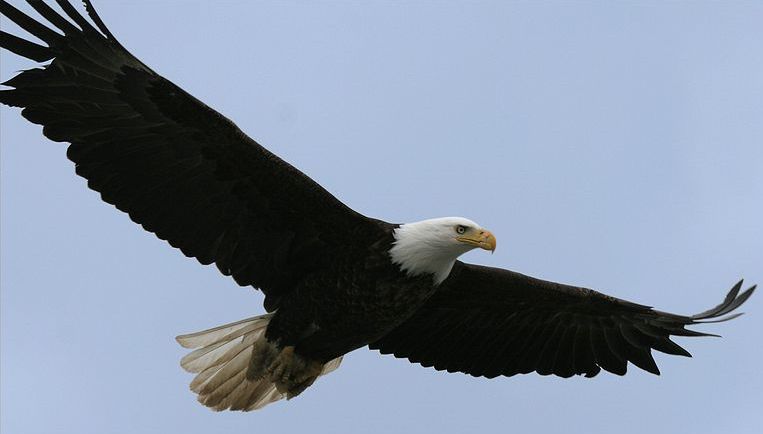
Pennsylvania's Bald Eagle Population Soaring

Recovering an endangered species requires suitable habitat, motivated staff, funding and time. Sometimes it takes decades. When a species has an extended reproductive period and breeds only once each year, time will be the limiting factor in the species' recovery.

Consider bald eagles in Pennsylvania. In 1983, only three pairs nested in Crawford County. That's when the state Game Commission began a seven-year restoration program. With funding from the Richard King Mellon Foundation and the federal Endangered Species Fund, biologists traveled to Saskatchewan where they collected and transported seven-week old nestlings to Pennsylvania. Over seven years, a total of 88 eaglets were relocated to hacking sites on the Susquehanna River near Harrisburg and in Pike County. Wildlife management in support of eagles was paid for with hunting license fees, leases on Game Commission properties and excise taxes on guns, ammunition and hunting gear.


By 1988, the state's population of nesting bald eagles had grown to 25 pairs. In three years the population doubled, and by 2006, biologists confirmed 100 nests statewide. Thirty years later -- in July 2013 -- the Game Commission officially confirmed 252 eagle nests in 56 of the state's 67 counties, with additional unconfirmed nests reported.

Patti Barber, a Game Commission biologist with the Endangered and Nongame Bird Section, could barely contain her enthusiasm.

"Young are still fledging, and we're still finding nests," she said. "The nest count for 2013 is up to 264."

Three of those nests are in the Pittsburgh area, one on each of the three rivers. The one overlooking the Monongahela River in the community of Hays just 5 miles from The Point has received the most media attention.

"The Hays location is ideal," Barber said. "It's on a steep inaccessible hillside, yet close to people."

For several months, Bob Mulvihill, an ornithologist at the National Aviary, has coordinated well-attended eagle watches in Hays. He often called my Sunday radio show with live updates. One young eagle fledged just two weeks ago and is now learning to fend for itself.
Barber expects more bald eagles to nest in this part of the state in the future.

"Right now we have 16 active nests in the southeastern counties of Bucks, Chester, Philadelphia, Delaware and Montgomery," she said, "so eagles seem to be adapting to urban areas."

Steep wooded hillsides along fish-filled rivers seem tailor made for nesting bald eagles. Barber calls this habitat, "almost as wild as a place can be in an urban setting."

Biologist, author and broadcaster Scott Shalaway can be heard 9-11 a.m. Saturdays on 1370 WVLY-AM (Wheeling), and noon-2 p.m. Sundays on 1360 WMNY-AM (Pittsburgh). He can be reached at http://scottshalaway.googlepages.com, and 2222 Fish Ridge Rd., Cameron, WV 26033.

Saturday, August 3, 2013

Champion, PA Teen to be Featured on Outdoors Show

By Rachel Basinger


Albie Saloom is seen here with his record book elk
he harvested in October 2012 in Colorado.
Saloom will be featured on the Outdoor Channel's
Outfitter's Showcase on Saturday.
At just 14, Albie Saloom of Champion, PA has put together a hunting resume most adult outdoors enthusiasts would love to have.

This past October, while on a hunting trip within the borders of the White River National Forest of Colorado, he added his crowning hunting achievement to date.

By the time the trip was over, Saloom had harvested a record book Rocky Mountain bull elk and a remarkable mule deer while hunting with Winterhawk Outfitters.

On top of that, he was interviewed by David Sparks, the host of Outfitters Showcase and will appear on the Outdoor Channel's television series at 5 p.m. Saturday.

The teenager is excited to be on the show.

“Now my friends can see where I was and the great adventure that I had with my dad,” he said.

Saloom was happy to talk about his accomplishments on the trip.

“The elk was quite a long shot,” he said. “We spotted it feeding more than 1,200 yards away. We tried to sneak in for a close shot but had to stop at 450 yards due to lack of cover.”
Even though it was very far out, Albie Saloom knew he could make the shot because he had spent hours practicing precision shooting before the trip.

Saloom's elk was Winterhawk's Bull of the Year. It scored 312 using the Safari Club International method and is expected to score above 350 using the Boone & Crockett method. In order to make the S.C.I. record book, a Rocky Mountain elk must obtain an score of 264 or greater.

Three days later, Saloom and his hunting party discovered several deer together and managed to slip into the middle of the herd.

“My heart was beating so hard that I was afraid the deer would hear it,” he said. “I was able to take a big buck that was standing a little farther away than the others.”
Both animals were harvested on public land under the guidelines of fair chase.
Albie Saloom's dad George Saloom said he was quite surprised at his son's success on the hunting trip.

“The odds of harvesting a bull elk on public land in Colorado is less than one in six,” he said. “A chance at a record book bull is very rare. I kept telling Albie that we may not even see a bull to shoot at, but somehow Albie seems to make the impossible happen.”

The teen has been hunting and fishing with family and friends since he was 4 years old and has bagged or witnessed someone else bag everything from pheasants and deer to bear and elk.

Albie Saloom's next hunting trip is scheduled for this month to Northeast Quebec to see and hunt Caribou herds with his uncle, Tim Saloom, and cousins.

“I love the outdoors,” he said. “You don't have to take an elk or catch a fish to have a great adventure. You just have to get out there and try. If you go as far as you can and stay out there as long as you are able, then something extraordinary is bound to happen.”
His dad said he is very proud of the teenager.

“It's not necessarily because of the elk,” George Saloom said. “It's his tenacity and understanding of conservation that make me proud. Albie will stay out and hunt when it's freezing and the snow is blowing. He just drinks a cup of tea to stay warm. He will climb straight up a mountain without complaining, and he often decides to let animals pass by without firing at them and rarely keeps the fish that he catches these days. I wish I could say that I'm his best hunting buddy, but I'm not. It's his dog Champ, but I can live with that.”

Rachel Basinger is a freelance writer.

Pennsylvania Early Migratory Bird Seasons Set

Changes this year will allow hunters to keep more birds in their possession.


Pennsylvania’s early migratory bird seasons have been approved, and changes this year will increase the number of birds hunters can keep in their possession.
The early seasons for mourning doves, Canada geese, woodcock and other migratory bird species break down similarly to last year.
The biggest difference is in regard to possession limits. A change in federal regulations has allowed Pennsylvania this year to increase possession limits for most migratory game birds from two times the daily bag limit to three times the daily bag limit.
Those changes are taking place across the board in the early seasons.
The calendar has had an influence on the opening days for some seasons.
Dove hunters will be able to take to the field Monday, Sept. 2 in the first segment of a triple-split season. The first segment ends on Saturday, Sept. 28 and daily hunting hours during the first segment are from noon to sunset.
Other dove-hunting segments run from Oct. 26 to Nov. 30 and from Dec. 26 to Jan. 1, with hunting hours during those segments set at one-half hour before sunrise to sunset.
The daily bag limit in each dove-hunting segment has been set at 15, with a possession limit of 45.
The September statewide season for resident Canada geese also will open Sept. 2, and continue through Sept. 25. The September season retains a daily bag limit of eight Canada geese, but the possession limit has climbed to 24.
Shooting hours during the September goose season are one-half hour before sunrise to one-half hour after sunset, except for on Sept. 14 and Sept. 21, when the season overlaps with youth waterfowl hunting days. On those days, shooting hours end at sunset.
There are special regulations – including smaller bag limits and possession limits – in a couple of areas of the state.
In most of the Southern James Bay Population Goose Zone, and on the Pymatuning Reservoir and the area extending 100 yards inland from the shoreline of the reservoir, excluding the area east of state Route 3011 (Hartstown Road), hunters will have a daily limit of three and a possession limit of nine.
Also, in a portion of western Crawford County, the daily bag limit is one goose and possession limit is three geese. That area begins south of state Route 198 from the Ohio state line to intersection of state Route 18, then follows state Route 18 south to state Route 618; follows state Route 618 south to U.S. Route 6; U.S. Route 6 east to U.S. Route 322/state Route 18; U.S. Route 322/state Route 18 west to intersection of state Route 3013; and state Route 3013 south to the Crawford/Mercer County line. The exception to the rules in this area is State Game Lands 214, where September goose hunting is closed. This restriction does not apply to youth participating in the expanded youth waterfowl hunting days, which are set for Sept. 14 and 21, when regular season regulations apply.
The controlled hunting areas at the Game Commission’s Middle Creek Wildlife Management Area in Lebanon and Lancaster counties, as well as all of State Game Lands 46, will remain closed to September goose hunting to address the decline in the resident Canada goose flock.
And, in the area of Lancaster and Lebanon counties north of the Pennsylvania Turnpike (Interstate 76) and east of state Route 501 to state Route 419; south of state Route 419 to Lebanon-Berks county line; west of Lebanon-Berks county line and Lancaster-Berks county line to state Route 1053 (also known as Peartown Road and Greenville Road); west of state Route 1053 to Pennsylvania Turnpike (Interstate 76), the daily bag limit is one goose, with a possession limit of three geese. This restriction does not apply to youth participating in the youth waterfowl hunting days, which are set for Sept. 14 and 21, when regular season regulations apply.
Kevin Jacobs, a waterfowl biologist with the Pennsylvania Game Commission, noted that recent liberalizations in Canada goose hunting opportunities, along with control programs being implemented by many municipalities and public and private landowners, appear to be stabilizing the growth of the state’s resident Canada goose population. The 2013 Pennsylvania spring resident Canada goose population was estimated at 279,212 , which is statistically similar to the recent eight-year average of 265,905.
However, populations remain significantly above the management goal of 150,000.
 “Hunting remains the most effective and efficient way to manage resident Canada geese, provided hunters can gain access to geese in problem areas,” Jacobs said.
Youth waterfowl days are open to licensed junior hunters who are 12 to 15 years old. To participate, a youngster must be accompanied by an adult, who may assist the youth in calling, duck identification and other aspects of the hunt. During those hunts, youth can harvest ducks, mergansers, coots and moorhens, and both youth and licensed adults can harvest Canada geese.
During youth waterfowl days, youth and adults have the same daily limit for Canada geese in the area being hunted. Bag limits for ducks, mergansers, coots and moorhens will be consistent with the limit for the regular season, which will be announced in mid-August, after the annual Waterfowl Symposium on Aug. 9. 
Pennsylvania’s woodcock season retains its longer format this year, opening on Oct. 19 and closing on Nov. 30. The daily limit remains three, but the possession limit increases to nine. 
The season for common snipe also will run from Oct. 19 to Nov. 30, which is the same structure as previous years. The daily limit is 8, and the possession limit is 24.
Virginia and sora rail hunting will run from Sept. 2 to Nov. 9. Bag limits, singly or combined, are three daily or nine in possession. The season for king and clapper rails remains closed.
Hunting for moorhen and gallinules also runs from Sept. 2 to Nov. 9, and the bag limits are three daily and nine in possession.
Migratory game bird hunters, including those afield for doves and woodcock, are required to obtain and carry a Pennsylvania migratory game bird license ($3.70 for residents, $6.70 for nonresidents), as well as a general hunting, combination or lifetime license. All waterfowl hunters age 16 and older also must possess a federal migratory game bird and conservation (duck) stamp.
Hunting hours for all migratory birds close at sunset, except for September Canada geese, as noted above, and the snow goose conservation season.
Annual migratory bird and waterfowl seasons are selected by states from a framework established by the U.S. Fish & Wildlife Service.
The “Pennsylvania 2013-14 Guide to Migratory Bird Hunting” brochure will be posted on the Game Commission’s website (www.pgc.state.pa.us) in mid-August.

Hunters are encouraged to report leg-banded migratory game bird recoveries online at www.reportband.gov, or use the toll-free number (1-800-327-BAND). Hunters will be requested to provide information on where, when and what species were taken, in addition to the band number. This information is crucial to the successful management of migratory game birds.