Particpants mus be 12 years of age by October 14th
Tuesday, September 12, 2017
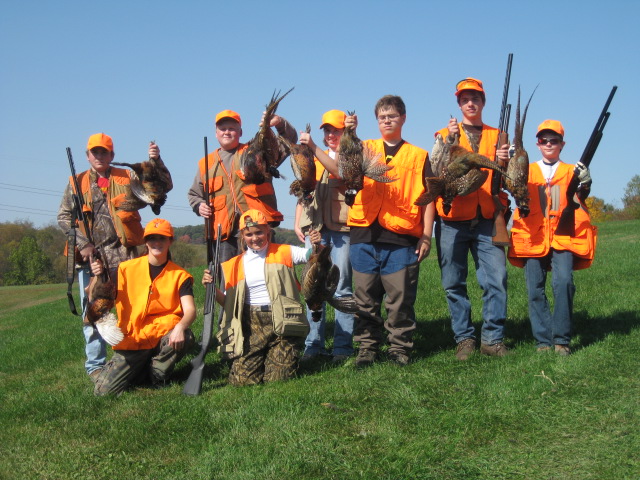
2017 Youth Pheasant Hunt At Bull Creek October 14th!
Particpants mus be 12 years of age by October 14th
Wednesday, September 6, 2017
Deer disease spreads weeks before early PA archery season
Since the confirmation Aug. 17 of an outbreak of a lethal white-tailed deer disease in southwestern Pennsylvania, the count of dead deer has risen from 150 to 450. More deaths are expected.
Less than three weeks before the start of the early antlerless archery season in Wildlife Management Unit 2B, the state Game Commission is investigating the spread of epizootic hemorrhagic disease in Allegheny, Beaver and Washington counties. It was first confirmed as the cause of a deer’s death in Greene Township, Beaver County.
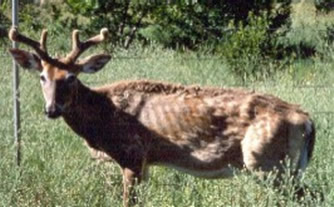
The viral disease cannot be contracted by humans but could threaten livestock. EHD is not related to a more serious problem for Pennsylvania deer, chronic wasting disease, and cannot be spread deer-to-deer. Symptoms include a disheveled appearance, drooling, disorientation and bloody patches of skin. Infected deer are frequently found near water and die from extensive hemorrhages in five to 10 days.
The last major EHD outbreak in southwestern Pennsylvania was detected in August 2007. By November an estimated 1,500 to 2,000 wild deer became infected and died in Allegheny, Beaver, Cambria, Fayette, Greene, Lawrence, Washington and Westmoreland counties. A penned deer in Franklin county also died of EHD.
In 2012 a smaller outbreak spread through parts of Allegheny, Beaver, Greene and Westmoreland counties, as well as Cambria and Crawford counties. About 20 deer were killed by EHD on the grounds of Graterford State Correctional Facility in Skippack, Montgomery County.
The epizootic hemorrhagic virus is common among North American deer but the disease occurs more frequently in Southern states where the small flies that carry it, generically called midges, live longer. The insects die off with the season’s first frost.
Archers could find a dearth of deer in some locations when the season opens next month. The Game Commission noted that there is no evidence that EHD can lead to long-term negative impacts on deer populations. The agency is urging residents to report sightings of sick or dead deer by calling the Southwest Region office at 724-238- 9523.
Saturday, August 19, 2017
2017 Youth Rifle Tournament August 27th! Sign Up Now...
The 9th annual Bull Creek Youth Rifle Tournament will be held Saturday August 27th, 2017 beginning at 11:00 AM. We will have three age brackets with trophies awarded for first, second and third place in each bracket. The entry fee is $5.00 per entrant.
Every entrant will receive a prize bag with items donated by many sponsors who help support this great activity and promote the teaching of safe firearm handling, shooting and marksmanship.
This tournament is open to the public. If you have a son or daughter in any of the age brackets (see entry form) you may print out the the entry form (see below) and either bring it to a monthly club meeting or mail it to the address listed (Do not send money, pay only at the event).
This event has been very successful and offers a great opportunity to learn gun and range safety as well as compete in a structured yet fun atmosphere!
Here is a 3 minute video from the 2014 event:
https://youtu.be/7HYw4xA6iYo
Every entrant will receive a prize bag with items donated by many sponsors who help support this great activity and promote the teaching of safe firearm handling, shooting and marksmanship.
This tournament is open to the public. If you have a son or daughter in any of the age brackets (see entry form) you may print out the the entry form (see below) and either bring it to a monthly club meeting or mail it to the address listed (Do not send money, pay only at the event).
This event has been very successful and offers a great opportunity to learn gun and range safety as well as compete in a structured yet fun atmosphere!
https://youtu.be/7HYw4xA6iYo
Sunday, July 23, 2017
Pennsylvania Game Commission asks for public support in treating chronic wasting disease
By Bob Frye
Amidst a situation described as “dire” already and potentially “catastrophic” soon, a campaign for the hearts and minds of Pennsylvania's hunters is underway.
Newly discovered chronic wasting disease is the reason.
Pennsylvania Game Commission officials said an adult buck with CWD, as the always-fatal ailment is known, recently was found on state game land 87 in Bell Township, Clearfield County. That's within disease management area 3.
Wasting disease was discovered there previously, in 2014. That, though, was on two captive deer farms.
It never was detected in wild deer there before now, despite the commission having tested 1,012 hunter- and road-killed whitetails, executive director Bryan Burhans said.
Its presence is bad news, given what's at stake.
Burhans said hunting generates $1.6 billion in economic activity statewide annually. Hunting license sales, meanwhile, largely fund the commission.
“The mere existence of chronic wasting disease in Pennsylvania represents a serious risk to our deer and elk herds and hunting and conservation in the commonwealth,” Burhans said.
It's not just one deer jeopardizing that.
Justin Brown, the commission's wildlife veterinarian, said the Clearfield County buck was euthanized by a wildlife conservation officer after exhibiting “clinical” signs of disease. It was emaciated, he said, and lethargic to the point of being unaware of its surroundings.
Given how the disease works, that suggests the deer was sick — and spreading infectious prions on the landscape — for at least one year, and perhaps two, before discovery, said Wayne Laroche, director of the commission's bureau of wildlife management.
So it's probably not one of a kind.
“I think there's a pretty high likelihood that there are” other sick deer out there, Laroche said.
If left unchecked, he said, the disease will spread “exponentially.”
That's how things are playing out elsewhere within the state.
Between 2012 and '15, the commission found — statewide — 22 CWD-positive deer. Then, last year alone, it found 25 more, all wild animals within disease management area 2 in southcentral Pennsylvania.
This year it has confirmed nine more there.
“So we have every reason to believe we'll be on the order of 40 or 50 cases this year,” Laroche said.
If that's not scary enough, discovery of wasting disease in management area 3 has potential to do more harm.
The sick Clearfield County buck was found just 10 miles from the western edge of the state's elk range. Elk, too, are susceptible to CWD.
The idea the state's elk might contract disease is alarming, said Cindy Dunn, secretary of the Department of Conservation and Natural Resources.
She called them the “keystone” of tourism in northcentral Pennsylvania. They, more than anything else, draw visitors to the region to learn about conservation, explore the outdoors and spend money, she said.
“A threat to our elk herd is a threat to conservation in our view, and a threat to tourism and our economy,” Dunn said. “So we view this very, very seriously.”
The Keystone Elk Country Alliance does as well.
Andy Olsen, a biologist with the Alliance, said the Elk Country Visitor Center has drawn more than two million visitors since opening in 2010. They've come from all 50 states and 45 countries.
The fear, he said, is that if wasting disease gets into the elk herd — and leads to fewer elk — that activity will dry up.
“Some business models in the region are based on per capita spending by visitors. So fewer visitors means less income for businesses,” Olsen said.
That's where the campaign — nothing short of a plea, really — comes in.
Burhans stressed the need to aggressively attack the disease, costly though it will be.
The commission has been spending about $1 million a year on wasting disease. He expects that to at least double.
But such investments are “necessary and the right thing to do,” he said.
Dunn and Olsen agreed and said they're behind whatever the commission wants and needs to do, with Dunn going so far as to pledge to “commit resources” to the battle.
And what is the commission's plan?
It will make available 2,800 deer management assistance program permits for disease area 3. They'll allow hunters to kill antlerless deer on public or private ground.
Applications will be available soon, Burhans said.
It also will establish two collection sites — at locations to be determined — where hunters will be asked to drop off deer heads for testing. Using those, the commission will pinpoint where sick deer are coming from.
That leads to perhaps the trickiest part of the commission's response plan.
Next winter, after hunting seasons close, it will use sharpshooters from the U.S. Department of Agriculture to cull potentially hundreds of deer, Laroche said.
The goal, he said, will be to remove highly susceptible family groups and contain or eliminate the disease, as has worked elsewhere.
“This is really the only tool we have, the only method that has shown any success,” Laroche said.
It sometimes has been controversial elsewhere, though.
In Wisconsin, for example, efforts to cull deer met with enough public opposition that they were largely abandoned.
Burhans, Dunn and Olsen called for public support of that work here.
The commission will conduct two public meetings this year — one in disease area 2, another in area 3 — to spread that message. Burhans hopes people will accept the necessity of killing deer for the sake of the overall herd.
“There is still a lot that's unknown about chronic wasting disease. But the methods we are proposing are the best options we have at this time, based on results in Pennsylvania and other states with CWD,” Burhans said.
“If we are going to have any chance of controlling this disease, we will need the support of our hunters, the public and our partners in the legislature.”
About the elk herd
So what happens if chronic wasting disease shows up in Pennsylvania's elk herd?
No one's saying.
The Game Commission has been looking for evidence of the illness in elk. Justin Brown, its veterinarian, said it tests virtually all of the adult elk killed by hunters each fall. It annually tests another dozen or so that seem sick.
“So we feel we have fairly good surveillance,” Brown said.
So far, no elk has come back positive for wasting disease.
But if one contracts it?
Wayne Laroche, director of the commission's bureau of wildlife management, wouldn't commit to trying targeted removal — i.e., sharpshooting — of elk. But he didn't rule anything out, either.
“We're going to have to cross that bridge when we come to it,” Laroche said.
— Bob Frye
Bob Frye is the everybodyadventures.com editor. Reach him at 412-216-0193 or bfrye@535mediallc.com. See other stories, blogs, videos and more at everybodyadventures.com.
Sunday, July 16, 2017
CWD FOUND IN THE WILD IN CLEARFIELD COUNTY
HARRISBURG, PA - Chronic wasting disease has spread to free-ranging deer in an area of the state where it previously had been detected only in captive deer.
The Pennsylvania Game Commission today announced a free-ranging whitetail buck in Bell Township, Clearfield County, has tested positive for chronic wasting disease (CWD).
A news conference about the new CWD-positive deer and the Game Commission’s response will be held on Thursday, July 13, at noon at the Game Commission’s Harrisburg headquarters. The news conference will be available to view on the Game Commission’s social media pages.
The CWD-positive buck was shot by a wildlife conservation officer June 7 on State Game Lands 87 because it showed signs of being diseased. Preliminary tests indicated the buck was CWD-positive, and the final results confirm the buck was infected with CWD, which always is fatal to deer and elk.
The buck was within Disease Management Area 3 (DMA 3), which was established in 2014 after surveillance by the Pennsylvania Department of Agriculture detected CWD at two captive deer facilities in Jefferson County.
Because this buck was located near the center of the 350-square-mile DMA 3, the DMA will not need to expand.
However, the Game Commission is immediately taking steps to increase CWD surveillance within DMA 3.
The Game Commission will be allocating Deer Management Assistance Program permits within DMA 3. Each hunter can purchase up to two of the 2,800 DMAP permits anywhere hunting licenses are sold by requesting permits for Unit 3045.
The permits will become available very soon, likely by July 13.
These DMAP permits can be used to take antlerless deer on public and private lands within DMA 3 during any established deer season. Hunters must acquire permission from private landowners prior to hunting.
Harvest data from DMAP permits will augment CWD surveillance.
All known road-killed deer within DMA 3, and a portion of the deer harvested by hunters, already are tested each year for the disease. The Game Commission is looking to increase this sampling effort and obtain more-precise harvest-location information. Cooperation from hunters will be an important first step to make this happen.
The Game Commission also plans to use sharpshooters in DMA 3, in a small, focal area where the CWD-positive deer was found, in hopes of stopping the disease before it has a chance to grow and spread.
In Pennsylvania, CWD has been an increasing threat. The disease also exists among wild deer in the area of southcentral Pennsylvania defined as Disease Management Area 2. Twenty-five free-ranging deer tested positive for CWD during 2016. And an additional four CWD-positive deer have been detected since, raising to 51 the total of CWD-positives detected within the DMA 2 since 2012.
While the spread of CWD within Pennsylvania is a concern statewide and a threat to the state’s deer and its deer-hunting tradition, this latest CWD-positive within DMA 3 is a concern also because of its proximity to Pennsylvania’s elk range, which abuts DMA 3. More than 100 elk are tested for CWD each year and, thus far, the disease has not been detected among the state’s elk.
“There is no vaccine to prevent deer or elk from contracting CWD, and there’s no treatment to cure infected animals,” said Game Commission wildlife-management director Wayne Laroche. “However, if we can remove the infected animals from this area so they are no longer coming in contact with healthy deer or shedding the prion that causes the disease, we may be able to slow its spread and minimize its effects on deer and elk, and the people who enjoy them.
“It’s important our response is as effective and efficient as possible to attempt to curtail this disease before it becomes well-established in an area where it not only is a threat to our deer, but also our elk,” Laroche said.
While CWD poses a serious threat to Pennsylvania’s deer and elk, there is no strong evidence it can be transmitted to humans. As a precaution, however, hunters are advised not to eat the meat from animals known to be infected with CWD, or believed to be diseased.
There already is a prohibition on removing the high-risk parts of harvested deer from any DMA. Hunters who harvest deer and take it to a meat processor or taxidermist within a DMA are making certain that deer are available to the Game Commission for CWD surveillance.
Laroche said cooperating deer hunters within DMA 3 will play a key role in the CWD surveillance to take place there. If the harvest locations of sampled deer are known, it will be possible to more precisely target management actions, he said.
It doesn’t cost anything to drop deer heads off for sampling, and if a sample tests positive, the hunter will be notified.
Game Commission Executive Director Bryan Burhans said it’s important to respond quickly and directly to the serious threat CWD represents. Response measures in areas where CWD is known to be present improve the chances of limiting the disease to a few areas as opposed to many, he said.
“For the sake of our deer and elk, and their importance to hunters and nonhunters alike, we must do all we can to control this threat in the Commonwealth,” Burhans said.
July 2017 Hunter Safety Course Now Registering!
Our Next course will be Offered on Saturday July 29th from 8AM to 4:30 PM. You may register for the class here.
HUNTER-TRAPPER EDUCATION CLASSES
All Hunter Education classes MUST be registered for online
Click Here To Register for July 2017 basic class
These Classes are FREE, but you must pre-register.Space is limited! Please register early!
Bull Creek Rod and Gun Club's Hunter-Trapper Education classes are held twice a year, in early spring and mid summer. Our last class was held in March, 2017. Classes are taught by 4 or 5 certified instructors who are both Bull Creek club members and trained by the Pennsylvania Game Commission. Plus, volunteers from the club and community assist the instructors with presentations offered in:
Eligibility: Student must be 11 years of age or higher to register and receive a training certificate. You MUST have completed this mandatory training and have reached at least 12 years of age to hunt in Pennsylvania.
Call 1-800-243-8519 to reach the Southwest Region Office in Ligonier, PA, for other
class schedules near you.
THESE COURSES ARE FREE!
Read a testimonial:
HUNTER-TRAPPER EDUCATION CLASSES
![]() |
| Sanctioned By PA Game Commission |
All Hunter Education classes MUST be registered for online
Click Here To Register for July 2017 basic class
These Classes are FREE, but you must pre-register.Space is limited! Please register early!
Bull Creek Rod and Gun Club's Hunter-Trapper Education classes are held twice a year, in early spring and mid summer. Our last class was held in March, 2017. Classes are taught by 4 or 5 certified instructors who are both Bull Creek club members and trained by the Pennsylvania Game Commission. Plus, volunteers from the club and community assist the instructors with presentations offered in:
- History of Hunter-Trapper Education in Pa.
- Knowledge of sporting arms, ammunition, and traps.
- Safe handling of sporting arms and trapping equipment
- Wildlife Conservation and Management
- Wildlife Identification
- Hunting and trapping laws
- Hunter-Trapper/Landowner relations and ethics
- Safe Clothing
- Outdoor Safety (Emergency first aid and survival)
- Field care of game
- Game Law presentation by Game Commission Officers
- Range Instruction
- Walk through shoot/don't shoot course
- Archery Demonstration
- Tree Stand Demonstration
Eligibility: Student must be 11 years of age or higher to register and receive a training certificate. You MUST have completed this mandatory training and have reached at least 12 years of age to hunt in Pennsylvania.
Call 1-800-243-8519 to reach the Southwest Region Office in Ligonier, PA, for other
class schedules near you.
THESE COURSES ARE FREE!
Read a testimonial:
Sunday, June 25, 2017
Pennsylvania hunters had one of their safest years on record in 2016
second-lowest ever, and for only the second time on record, a year passed without a single fatality related to gun handling while hunting or trapping in Pennsylvania, according to a newly released report from the Pennsylvania Game Commission.
There were 25 hunting-related shooting incidents statewide during 2016. Only 2015 had a lower number of incidents with 23.
And the only other year without a hunting-related fatality in Pennsylvania was 2012.
The trend of increasingly safer hunting is something of which Pennsylvania’s hunters – and the Game Commission’s team of volunteer instructors – can be proud, said Game Commission Executive Director Bryan Burhans.
Decades ago, hundreds of incidents occurred annually, year after year in Pennsylvania.
“There’s always work to do when it comes to improving hunter safety, because even one incident is too many,’ Burhans said. “But the fact remains that hunting is safer than it’s ever been, and in Pennsylvania, the credit for that can be shared by the legions of hunters who make a habit out of making good decisions and the dedicated instructors who have trained them so well.”
Pennsylvania has compiled data on hunting-related shooting incidents (HRSIs) since 1915. HRSIs in Pennsylvania have declined nearly 80 percent since hunter-education training began in 1959. Prior to 2013, there never had been fewer than 33 incidents reported in a year, and 2016 marks the fourth straight year in which fewer than 30 incidents were reported.
In 2016, nine of the 25 incidents with an identified offender resulted from individuals with 10 or fewer years of hunting experience.
One incident involved a youth participating in the Mentored Youth Hunting Program, though it’s important to note the youth and his mentor were in violation of the rules of the program when the incident occurred. The Mentored Youth Hunting Program, which enables hunters under the age of 12 to harvest certain wildlife species if they are accompanied by a licensed adult, continues to be safe.
About 31,274 Mentored Youth Permits were issued during this timeframe.
In its annual reports on HRSIs, the Game Commission establishes an incident rate by computing the number of accidents per 100,000 participants. The 2.73 incident rate reported for 2016 is higher than the 2015 rate of 2.46.
The leading causes of hunting-related shooting incidents in 2016 were a victim being in the line of fire, which accounted for 44 percent of the total, followed by unintentional discharge, which accounted for 20 percent of the total. Incidents where the victim was shot in mistake for game remain at record-low levels.
The use of fluorescent orange in many seasons and ongoing hunter-education efforts are essential to the upward trend in hunter safety, the report states.
In 2016, 35,452 students received their Basic Hunter-Trapper Education certification in Pennsylvania.
Those student graduates, their volunteer hunter-education instructors and the hunting public at large all can be proud of the role they have played in making hunting the safest it’s ever been, Burhans said.
Game Commissioner Jim Daley, of Cranberry Township, a longtime hunter-education instructor who was recognized in 2009 as Pennsylvania’s Instructor of the Year, said the dedicated corps of 2,237 volunteer instructors plays a key role in improving hunter safety.
He thanked those instructors, and the state’s hunters for continuing to play it safe.
“Before hunter-education training first was launched, hunting related shooting incidents occurred far too frequently, and to see that number reduced to less than 30 in 2016 with no fatalities in Pennsylvania is quite an accomplishment,” Daley said. “A lot of hard work, and many, many volunteer hours are behind this achievement, and I’m proud to be part of the group working to make hunting in Pennsylvania even safer. With 50-plus years of hunter education in Pennsylvania, a hunter-safety culture is now becoming firmly ingrained in our hunters and mentors”
Saturday, June 17, 2017
PA HUNTING LICENSES TO GO ON SALE JUNE 19
Pennsylvania hunters and trappers soon will be lining up to purchase their 2017-18 licenses, and they need to be aware of some important changes implemented since this time last year.
Hunting licenses for 2017-18 go on sale June 19. The licenses become valid July 1 and, after that date, all who hunt, trap or who want to apply for an antlerless deer license must have an up-to-date 2017-18 license to do so.
One noticeable change for 2017-18 license buyers is that the full regulations digest typically given out when licenses are purchased is not being provided for free this year.
Instead, all license buyers will receive a complimentary “pocket-guide” that contains general hunting regulations, hunting hours, fluorescent orange requirements, a map of the Wildlife Management Units, and season dates and bag limits.
License buyers who wish to view the full digest can do so online at thewww.pgc.pa.gov, or they can opt to purchase a printed digest for $6. Digests will be sold over-the-counter at Game Commission Region Offices and Harrisburg Headquarters. When purchased elsewhere, the digests will be mailed directly to license buyers.
By no longer giving free digests to all license buyers, the Game Commission will save significantly on the cost of printing and mailing hundreds of thousands of digests.
Game Commission Executive Director Bryan Burhans explained this decision is being motivated by the agency’s financial situation, which already has caused the Game Commission to eliminate programs and reduce personnel.
“These kinds of reductions in services are necessary as the Game Commission approaches nearly two decades without an increase in the cost of a general hunting or furtaker license,” Burhans said.
Unlike most state agencies, the Game Commission doesn’t get a share of tax money from the state’s general fund. Instead, funding comes primarily from the sale of licenses, the fees for which are set by the General Assembly.
A challenging fiscal climate also is behind another significant change in 2017-18 – the requirement for all adult and senior pheasant hunters to purchase a permit.
In recent decades, pheasant hunting in Pennsylvania has been possible only through the release of farm-raised pheasants, and the Game Commission’s pheasant propagation program annually has raised and released about 200,000 pheasants or more for hunting statewide. While the program is a popular one, it doesn’t come cheap, costing about $4.7 million annually in recent years.
Steps have been taken to curtail the cost of the program. The Game Commission last year closed two of its four pheasant farms, and the statewide pheasant allocation for 2017-18 has been reduced to 170,000.
By creating a pheasant permit, the Game Commission has established a mechanism to help fund the pheasant program – giving hunters a chance to help sustain the program rather than see it vanish.
Pheasant permits are required for all adult and senior hunters, including senior lifetime license buyers, who pursue or harvest pheasants. Junior hunters do not need a pheasant permit to hunt or harvest pheasants. Each pheasant permit costs $26.90, and the permit is required in addition to a general hunting license.
General hunting licenses and furtaker licenses each continue to cost $20.90 for Pennsylvania residents and $101.90 for nonresidents.
Resident senior hunters and furtakers, ages 65 and older, can purchase one-year licenses for $13.90, or lifetime licenses for $51.90. For $101.90, resident seniors can purchase lifetime combination licenses that afford them hunting and furtaking privileges. Like other hunters and trappers, seniors still need to purchase archery licenses before participating in the archery deer season, bear licenses to pursue bruins, and permits to harvest pheasants, bobcats, fishers or river otters.
A complete list of licensing requirements can be found at www.pgc.pa.gov.
Burhans thanked hunters and trappers for their enduring support of Pennsylvania wildlife through their annual license purchases.
“At any price, the opportunity to spend days afield in Penn’s Woods, carrying on our hunting and trapping heritage, is invaluable,” Burhans said. “Our pheasant hunters are a great example of that. When we first proposed creation of a pheasant permit, many of them stepped up to say they’d gladly pay $50 or a $100 for their permits that would keep the propagation program going and sustain the opportunity to hunt pheasants in Pennsylvania.
“For more than a century, hunters and trappers have funded the conservation of all the Commonwealth’s wildlife, for all Pennsylvanians, and we owe them a debt of gratitude,” Burhans said. “Their contribution not only has produced some of the best deer, bear and turkey hunting in the nation, it’s helped to create and maintain healthy habitat and preserve a diversity of wildlife that can be enjoyed by all statewide.”
Sunday, May 21, 2017
ADDITIONAL CWD CASES DETECTED IN PENNSYLVANIA WILD DEER
HARRISBURG, PA - The Pennsylvania Game Commission tested 5,707 deer and 110 elk for Chronic Wasting Disease (CWD) during 2016.Twenty-five wild deer tested positive for CWD. All of the wild CWD-positive deer were in or near Disease Management Area 2 (DMA 2), the only area of the state where CWD has been detected in the wild. These 25 deer more than doubled the number of CWD-positive deer detected in DMA 2 from 2012 to 2015.
Through 2016, 47 wild deer have tested positive for CWD in DMA 2.
Each year, the Game Commission collects CWD samples from hunter-harvested animals, road-kills, escaped captive cervids, and any cervid showing signs of CWD.
Since 2002, the Game Commission has tested over 61,000 deer for CWD. Although samples are collected from across the state, efforts were increased within the three Disease Management Areas (DMAs), which are areas in the state where CWD has been identified in wild and/or captive deer. These include: DMA 1 in parts of Adams and York counties in which CWD was identified on a captive deer farm in 2012; DMA 2 in parts of Bedford, Blair, Somerset, Fulton, Cambria, and Huntingdon counties where CWD has been identified in multiple wild deer since 2012 and recently on three captive deer facilities; and DMA 3 in Jefferson and Clearfield counties where CWD was detected on two captive deer facilities in 2014.
The 25 new CWD-positive wild deer were part of 1,652 deer samples collected within DMA 2 during 2016. CWD-positive deer included 13 road-killed deer, 10 hunter-harvested deer, and two deer showing signs consistent with CWD.
No CWD positive wild deer were detected in DMA 1, DMA 3, or the remainder of the state in 2016 or in any previous year.
During late 2016 and early 2017, CWD also was identified on three captive deer farms in the southcentral part of the state in Bedford, Fulton, and Franklin counties. These are the first detections of CWD-positive captive deer within DMA 2. Additional information on these recent positives in captive cervids and the CWD surveillance and response program in captive deer can be found through the Pennsylvania Department of Agriculture.
As a result of new detections in wild deer and cervid captive facilities, DMA 2 boundaries will be expanded, though the changes are not yet final. The eastward expansion will include the area around the captive facility in Franklin County where a CWD-positive deer was detected.
Within DMAs, special regulations are in place to reduce the risk of CWD spreading to other areas. These regulations include restrictions on transporting deer carcasses, feeding deer, and use of urine-based deer lures.
CWD not only is a threat to Pennsylvania’s deer, but also the elk herd; however, no positives have been detected in our elk herd to date. During 2016, 110 wild elk were tested for CWD, including hunter-harvested animals and elk exhibiting clinical signs consistent with CWD.
How much woods technology is too much?

How much is too much when it comes to technology in the hunting woods?
The Pennsylvania Game Commission is debating that right now.
Why?
Three manufacturers and retailers of electronic products approached Game Commissioners earlier this year to ask that those items be made legal for hunting.
Jonathan Kalasinski of Heated Hunts in Clarks Summit makes a battery-operated scent dispenser. Users load up to one ounce of deer urine or other scents in the device then turn it on. Heated vapors escape and, presumably, attract game.
The fact that Pennsylvania doesn't currently permit them is putting his 7-month-old company “at risk,” Kalasinski said.
Sheri Baity of Crow's Nest Calls in Covington asked that hunters be allowed to use the Nite Site scope-mounted lights she sells at her predator hunting website. They are not infrared and do not track an animal's heat signature, she said. Nor do they make a rifle more accurate.
They do, however, allow hunters — typically out at night after coyotes and the like — to see entire targets. That, she said, promotes safety.
“I have found that when using the lighting (currently) allowed for coyote hunting, the eyes of the animal are illuminated. But the rest of the body is still a shadowy figure,” Baity said.
“I don't feel it allows the whole target to be safely and positively identified.”
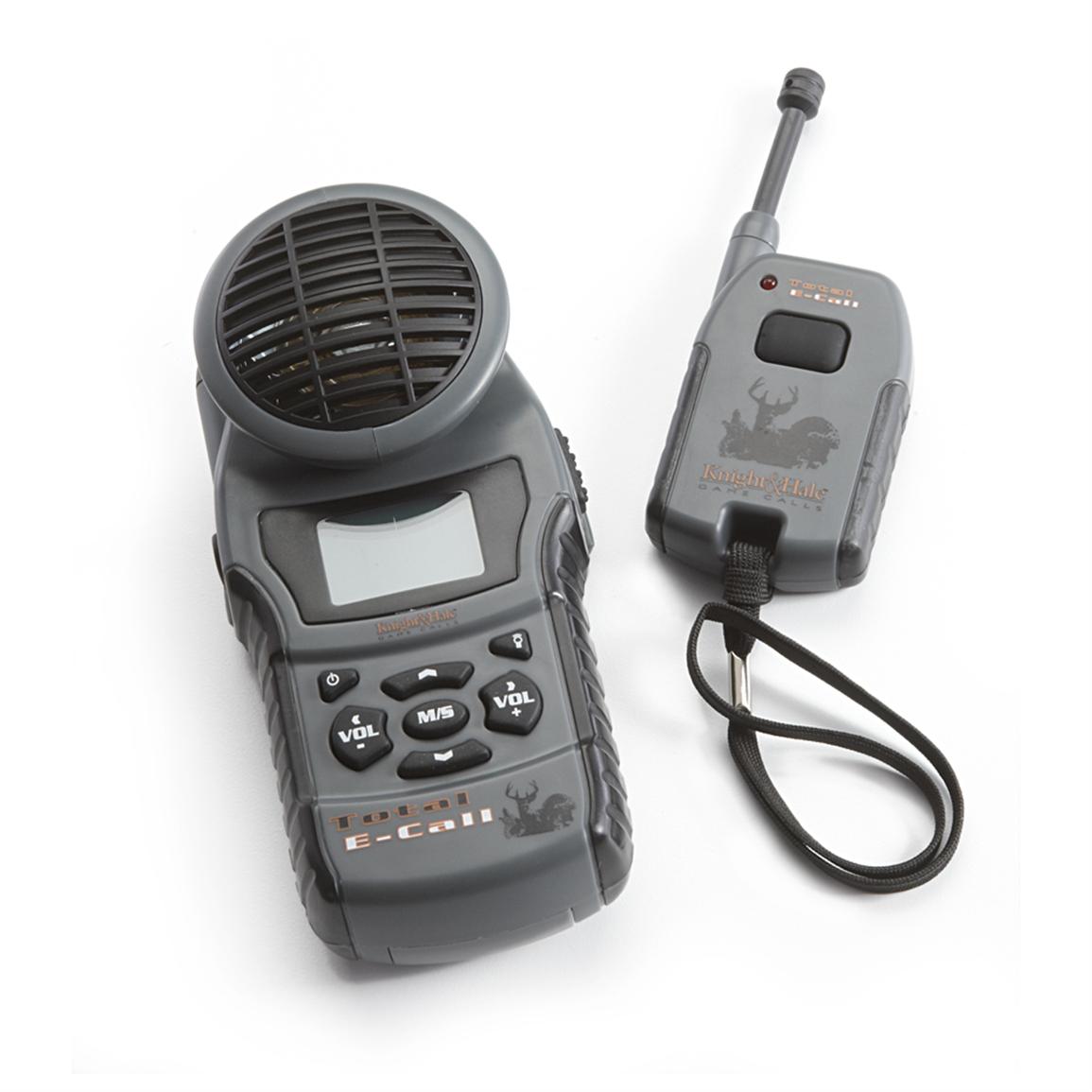
Finally, Mike Dillon, general manager of FoxPro in Lewistown, asked commissioners to legalize electronic turkey calls. Five other states already permit them, he said.
Electronic turkey calls are not, as some believe, as effective as mouth or hand calls, Dillon said. But they do make it possible for beginners to get in the woods sooner. They're also safer, he said.
“By positioning the call away from a turkey hunter, the risk of being shot by another hunter is minimized,” Dillon said.
Commissioners had questions. Some centered around fair chase.
Another focused on what might be called woodsmanship.
Commissioner Jim Daley of Butler County said learning to use a turkey hand or mouth call takes time and practice. That extends the season.
“But I think you're going to lose that long-term commitment to turkey hunting when a person only has to put a new battery in and turn it on,” Daley said.
The rules regarding electronics previously have been updated to allow for hearing amplification devices, laser rangefinders and lighted nocks, among other things. Perhaps it's time to look at them again, Kalasinski said.
Commissioners agreed. They tasked agency staff with looking into the products and coming back with recommendations, perhaps as early as the board's June meeting.
“I think it's time we take a look at it, review it, see if there is any way we can introduce some of these devices as long as the resources are kept in mind,” said commissioner Tim Layton of Somerset County.
Bob Frye is the everybodyadventures.com editor. Reach him at 412-216-0193 or bfrye@535mediallc.com. See other stories, blogs, videos and more at everybodyadventures.com
.
.
Subscribe to:
Posts (Atom)